

A waterfront theatre, roofscape housing system, and cultural infrastructure for Corralejo
LOCATION
Corralejo, Fuerteventura, Canary Islands, Spain
Corralejo, Fuerteventura, Canary Islands, Spain
YEAR
2025
2025
TYPE
Urban design, landscape strategy, housing, cultural architecture, public space
Urban design, landscape strategy, housing, cultural architecture, public space
SCOPE
Territorial analysis, masterplan, modular housing system, theatre and fablab design, landscape framework, public space strategy, community infrastructure, business model
Territorial analysis, masterplan, modular housing system, theatre and fablab design, landscape framework, public space strategy, community infrastructure, business model
STATUS
Urban proposal
Urban proposal
PROJECT OVERVIEW
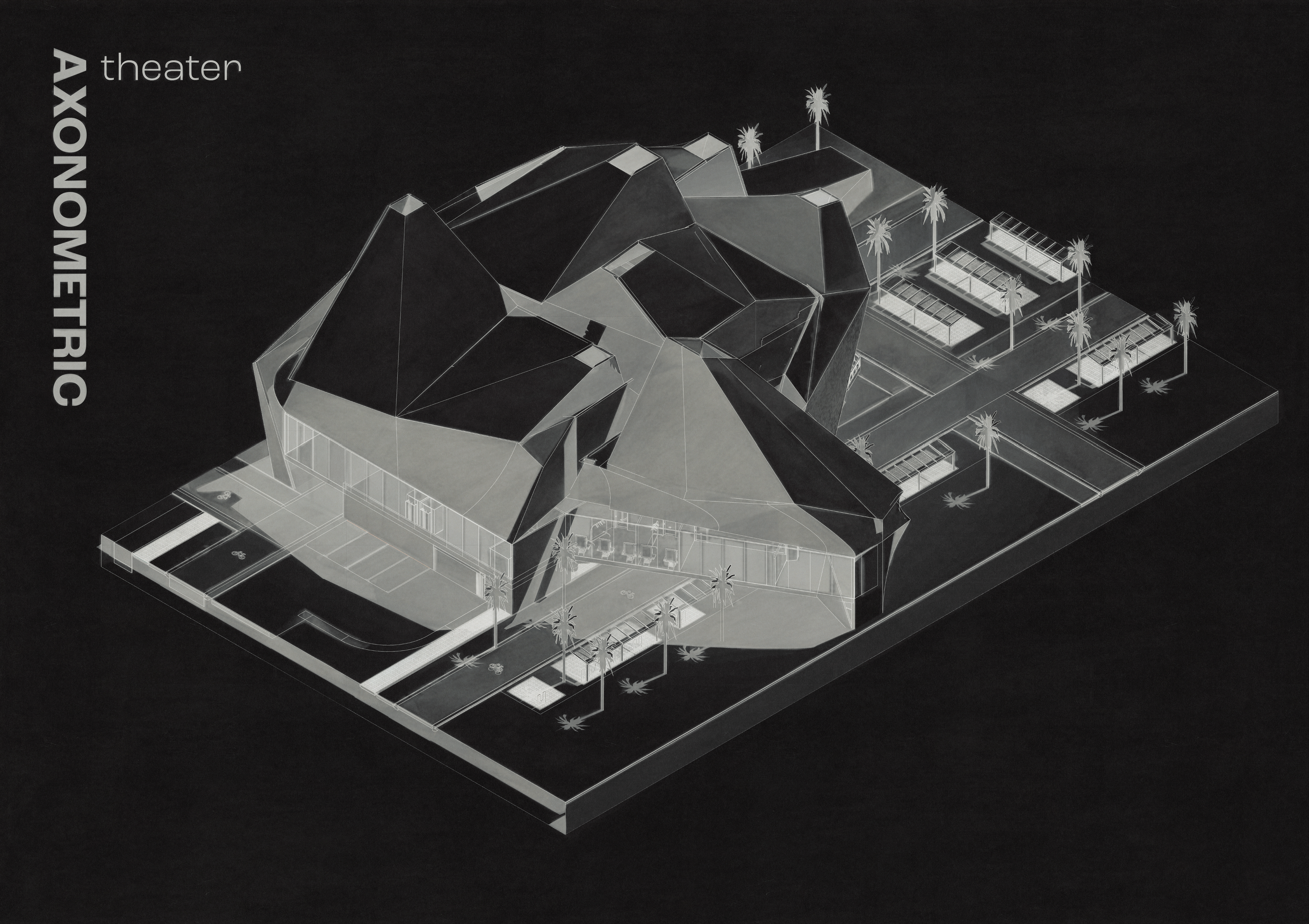
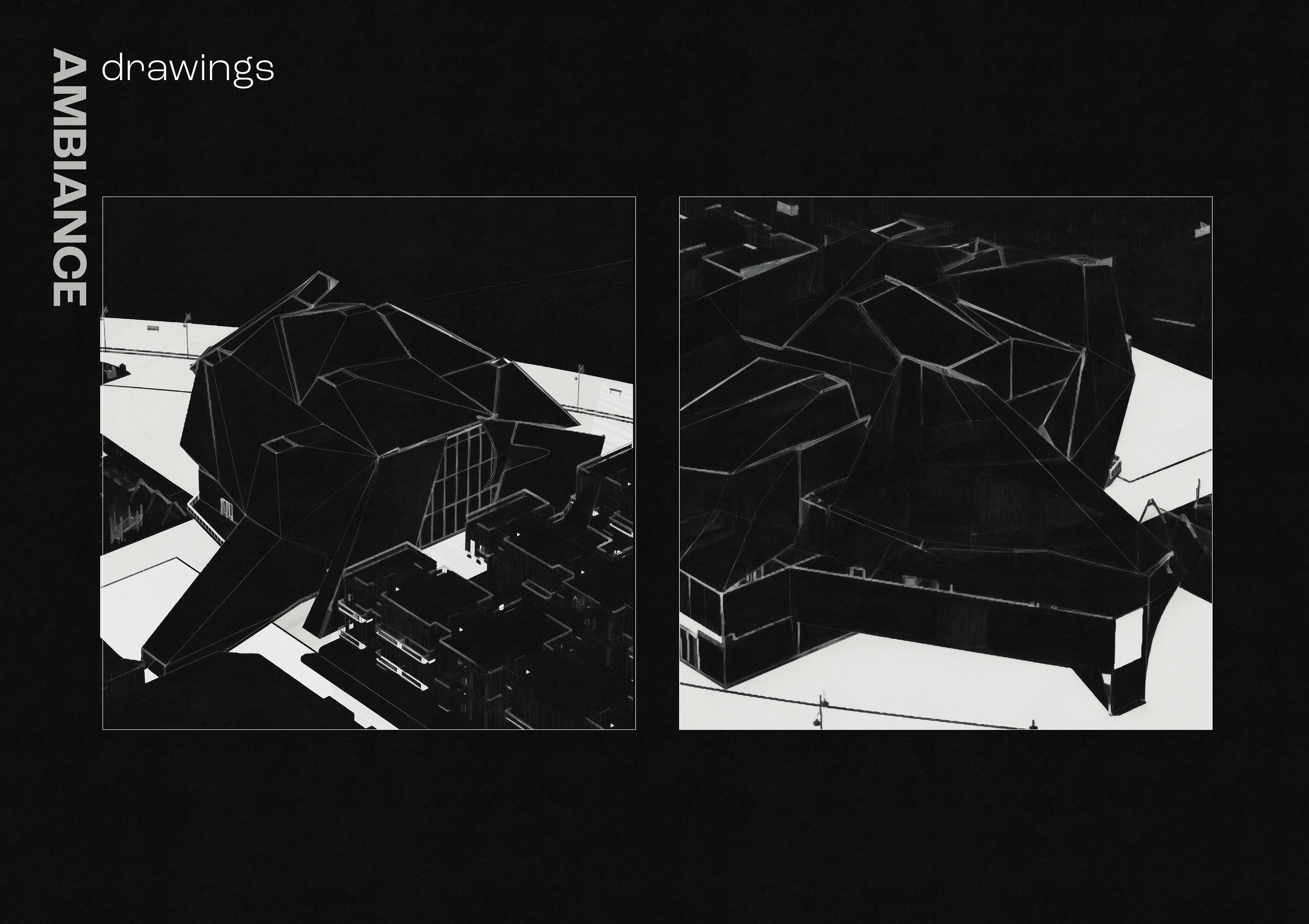
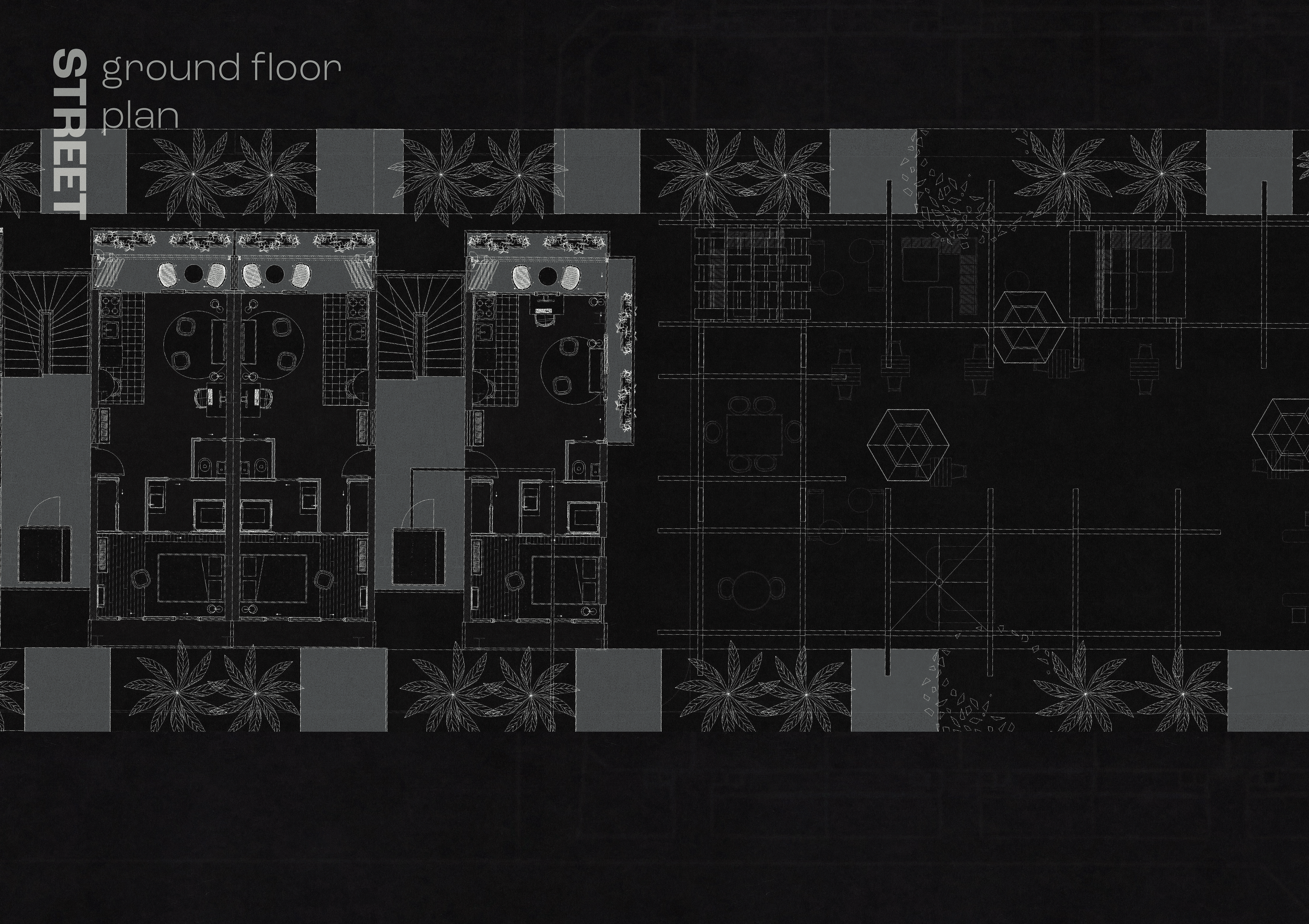
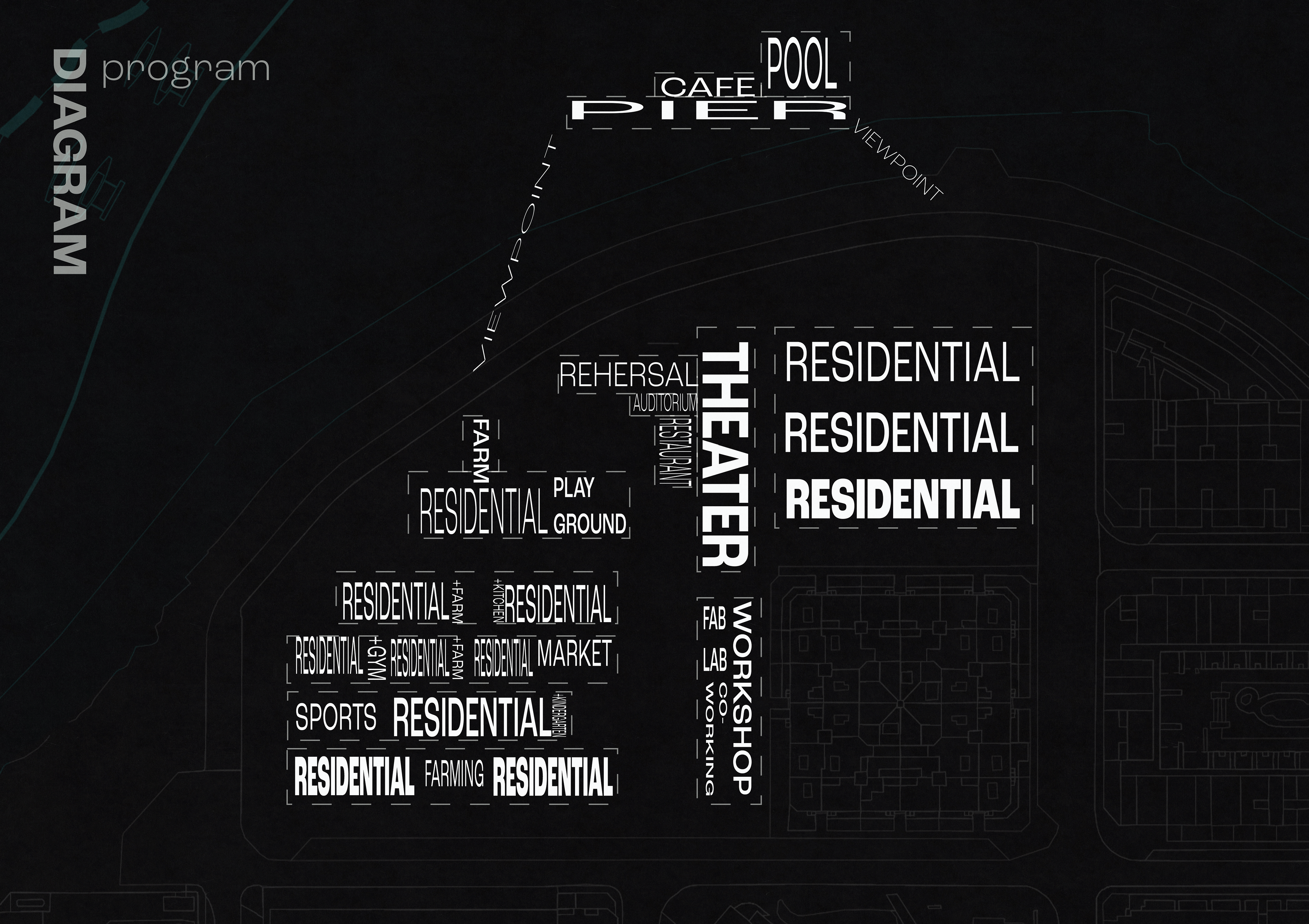
Murga Spine is an urban and architectural proposal for the waterfront of Corralejo, developed as a multi-scalar response to the relationship between coastal landscape, collective life, seasonal occupation, and local cultural identity. The project is organised around the transformation of a neglected waterfront path into a civic and spatial spine that structures the placement of housing, public space, and a theatre and fablab dedicated to the preparation and celebration of the annual Murga festival.
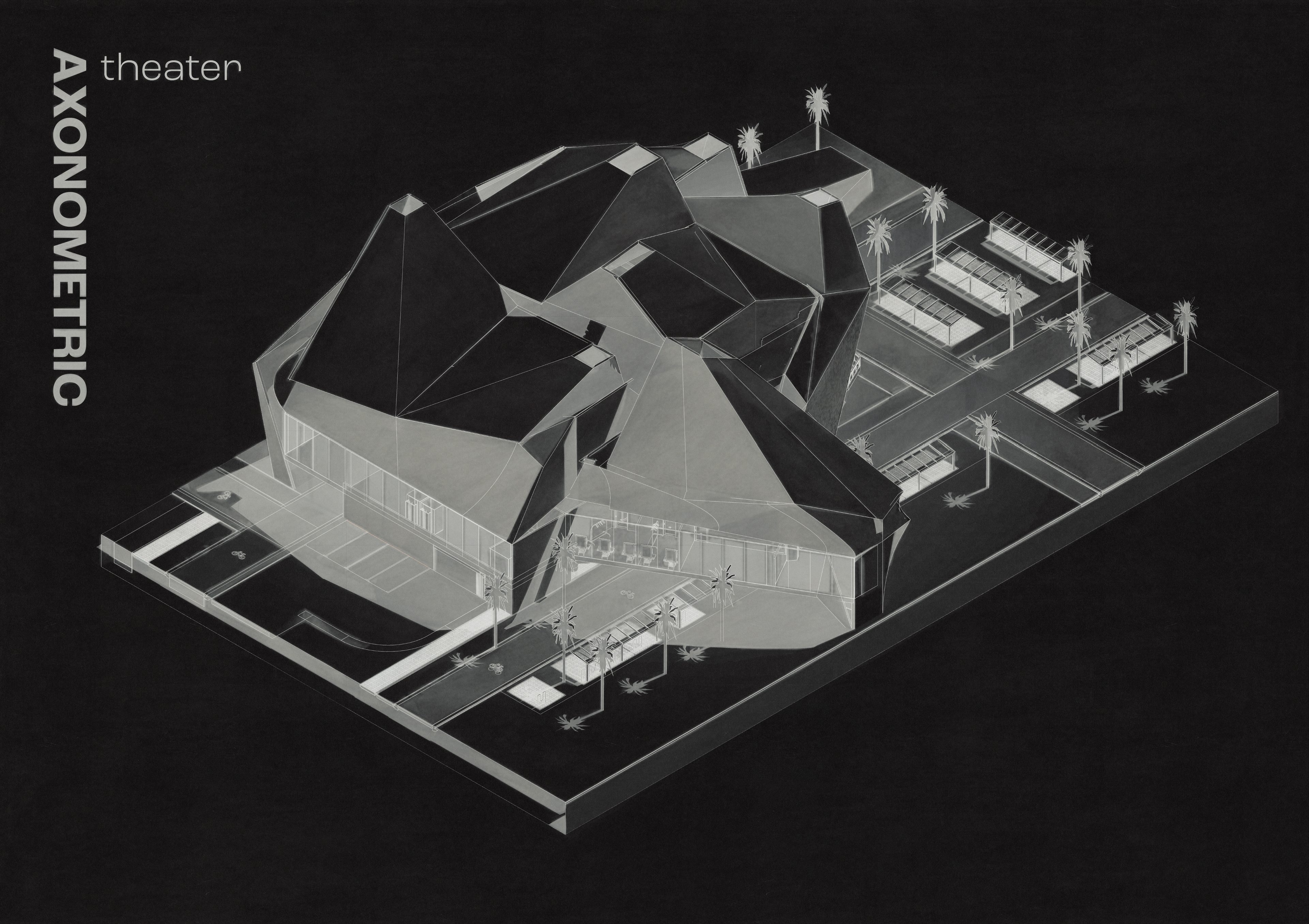
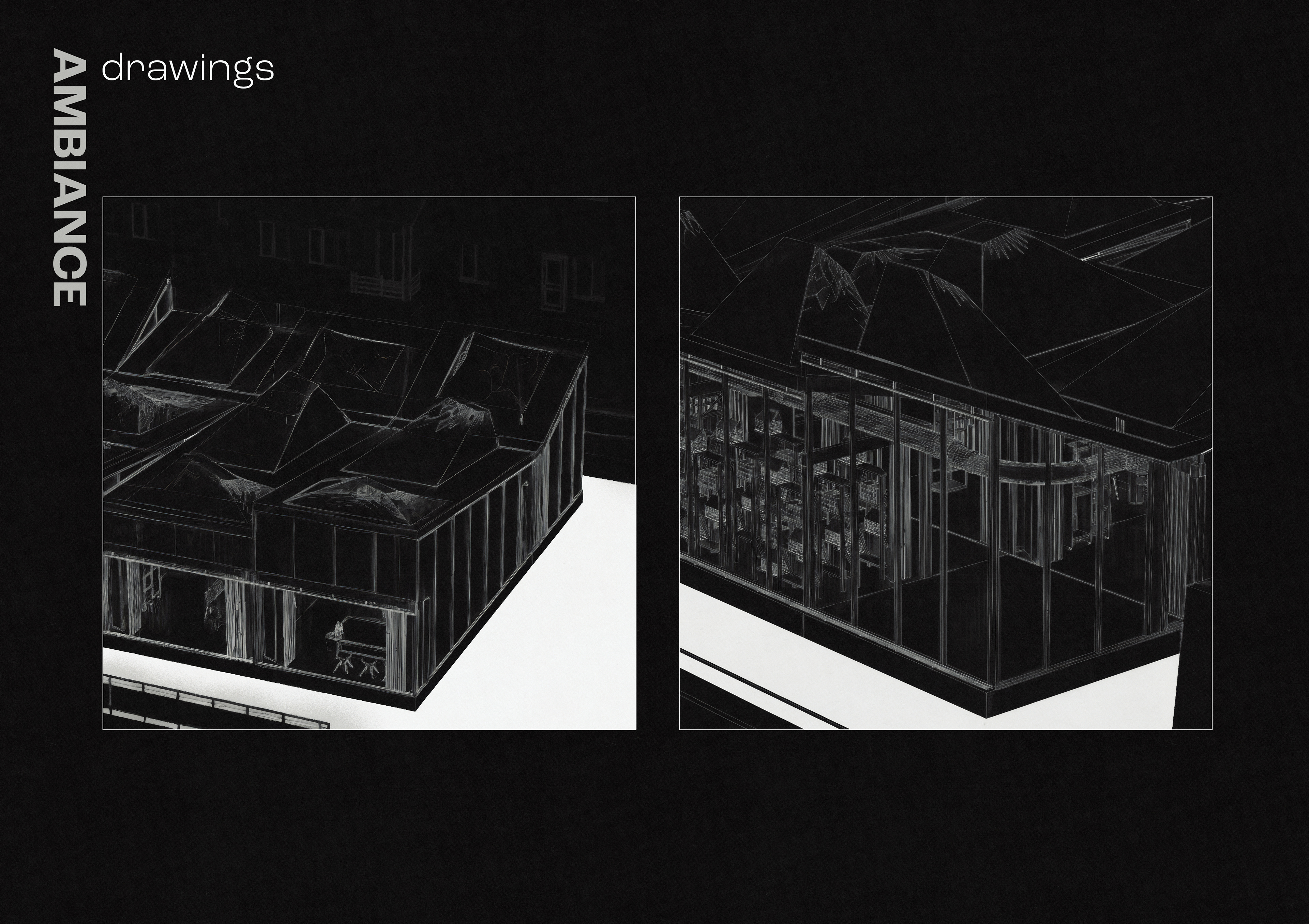
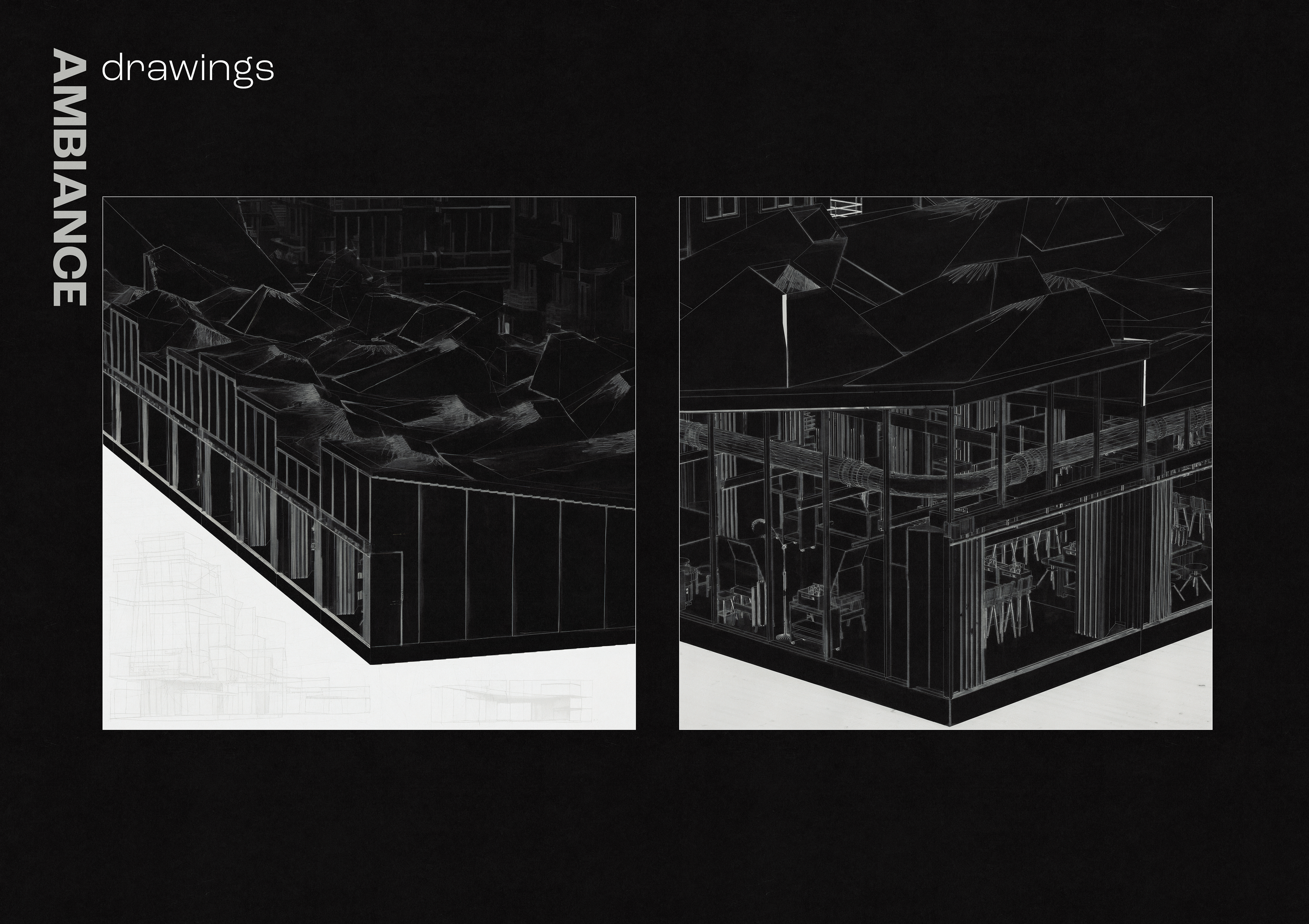
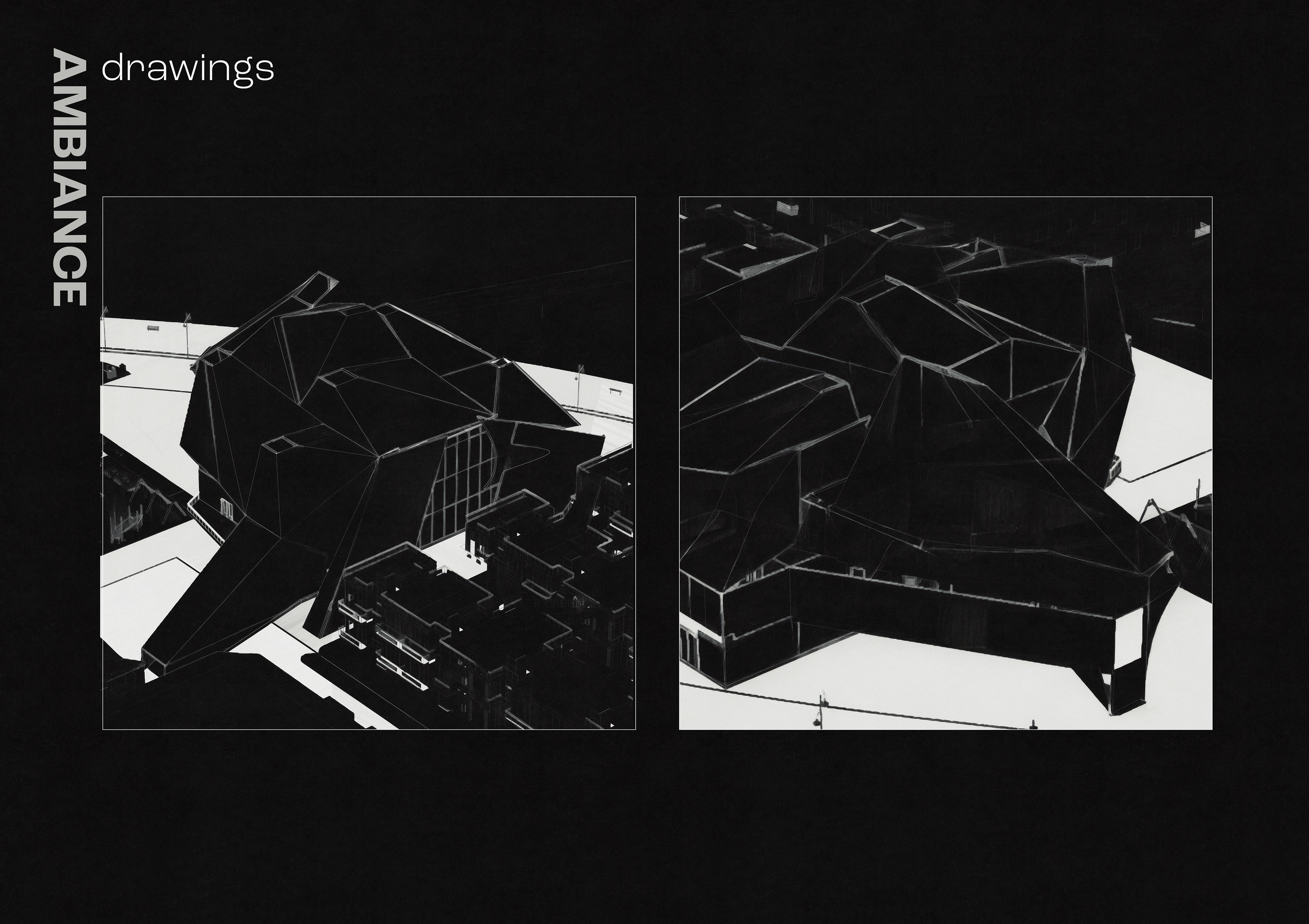
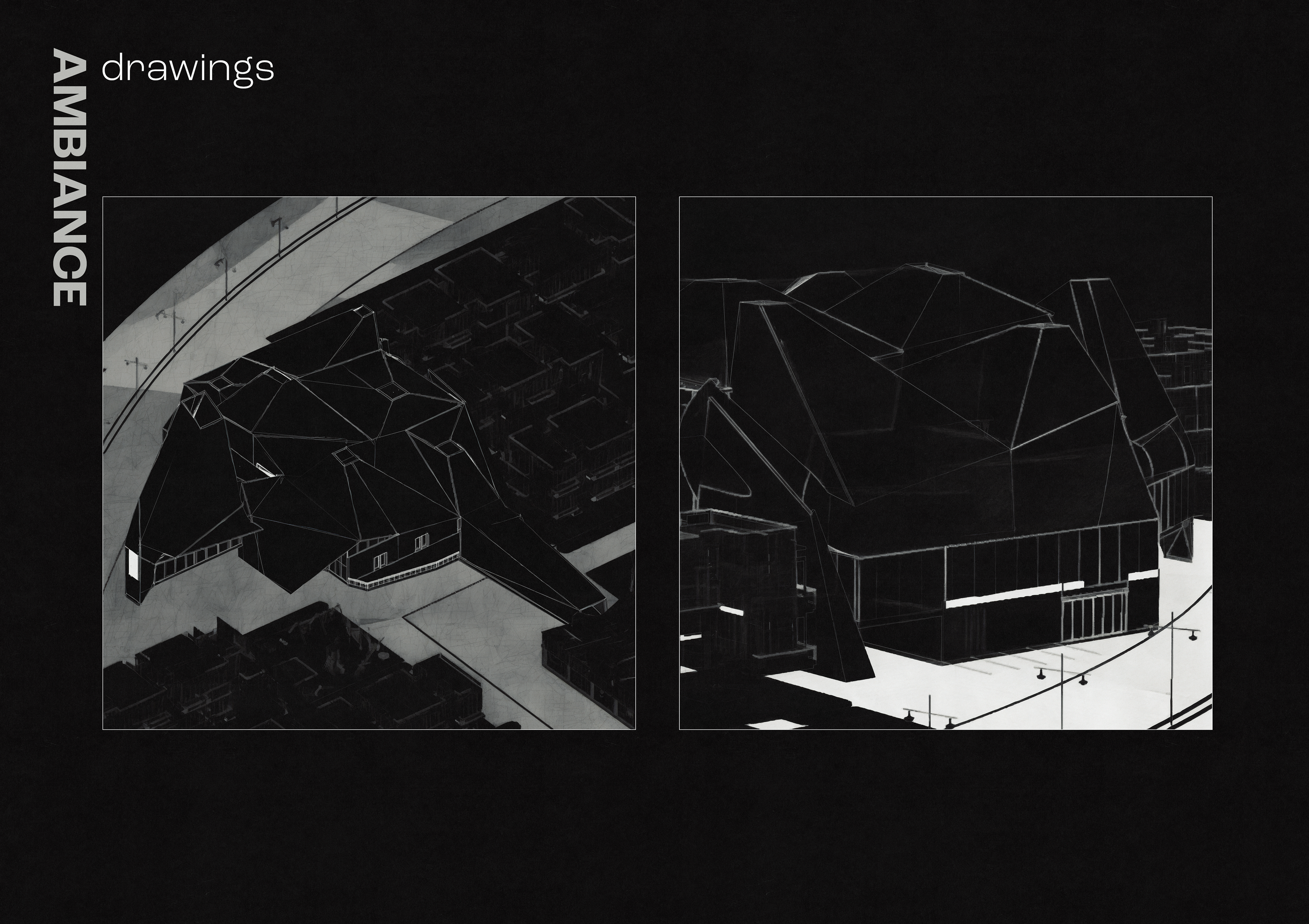
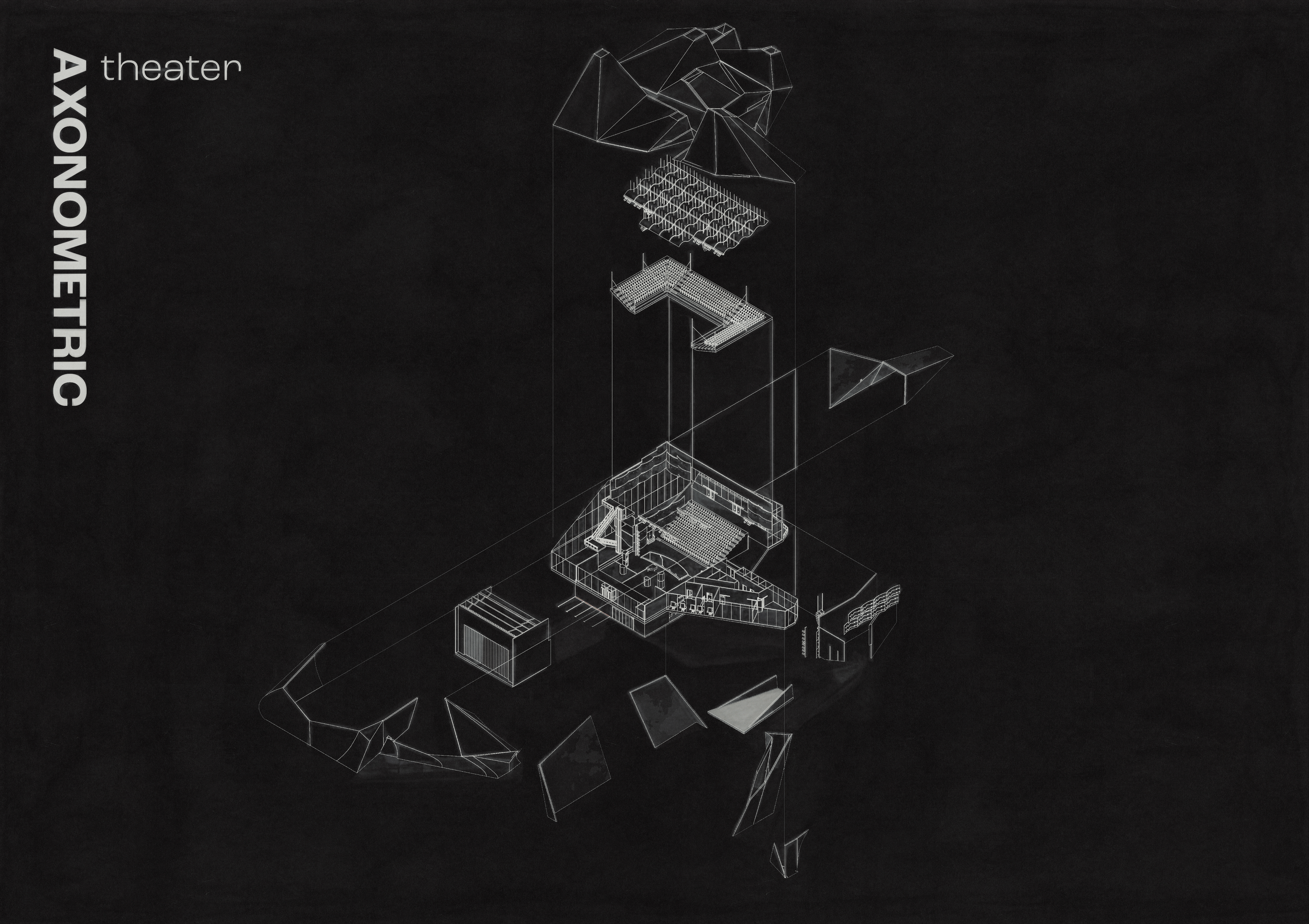
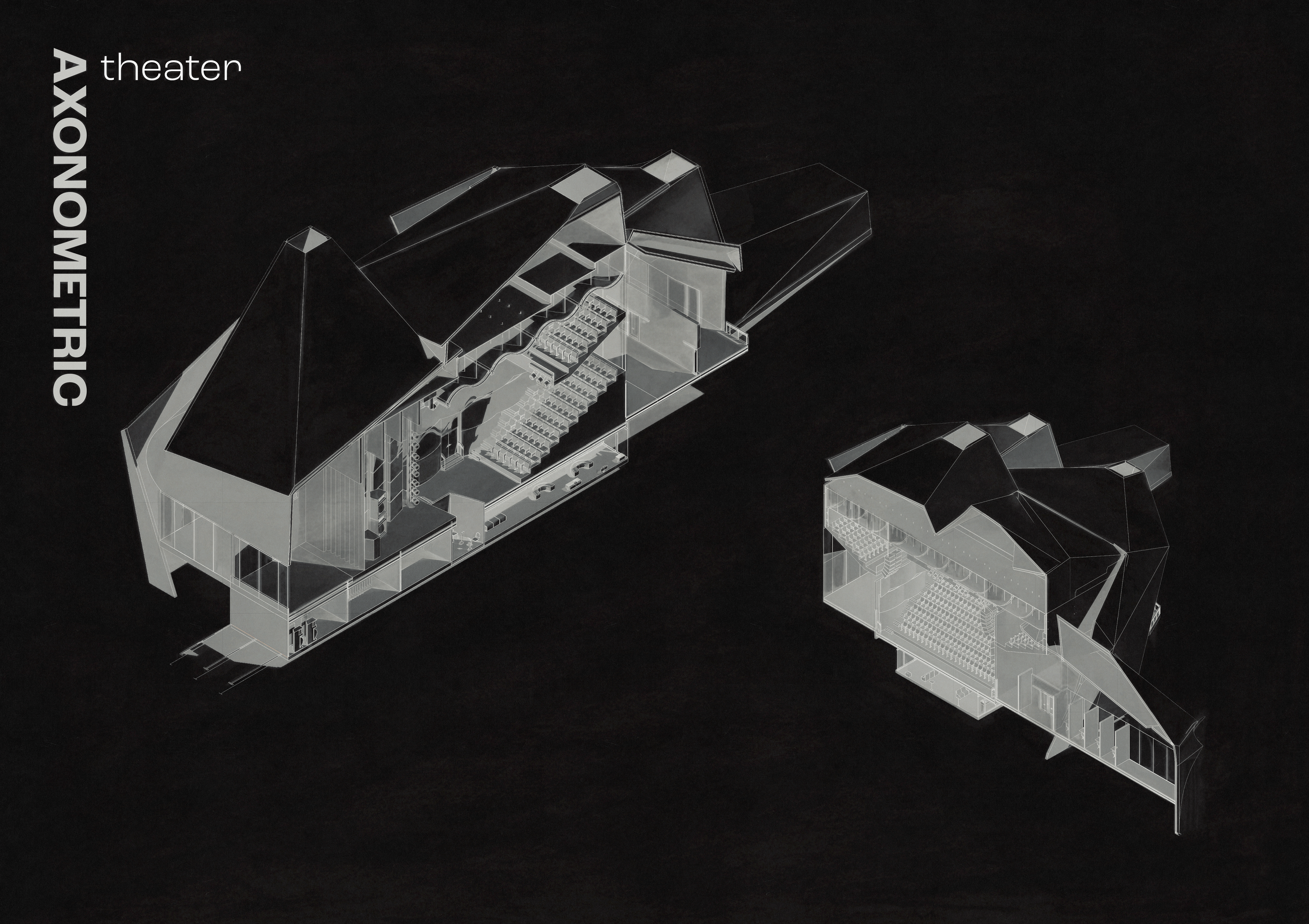
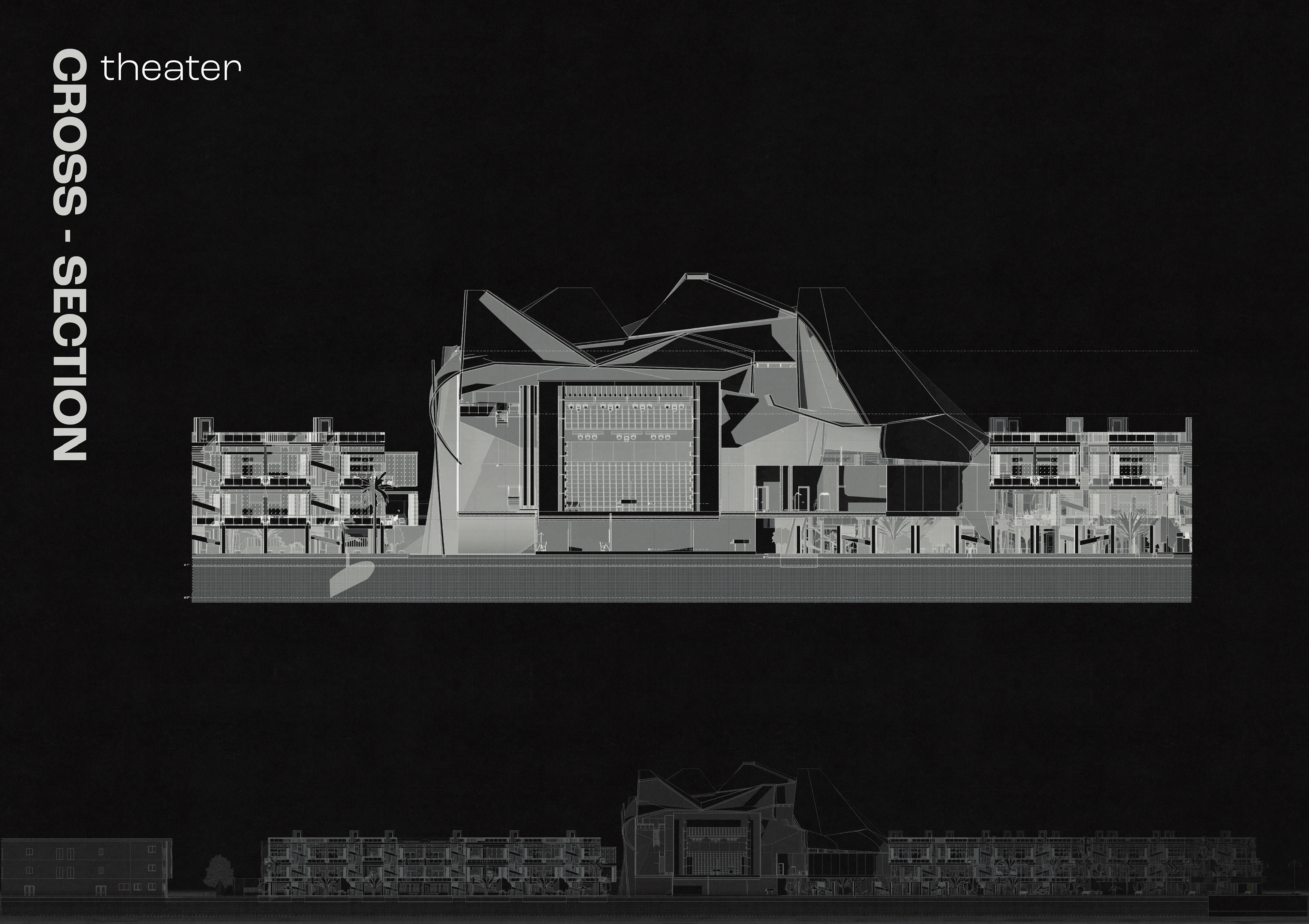
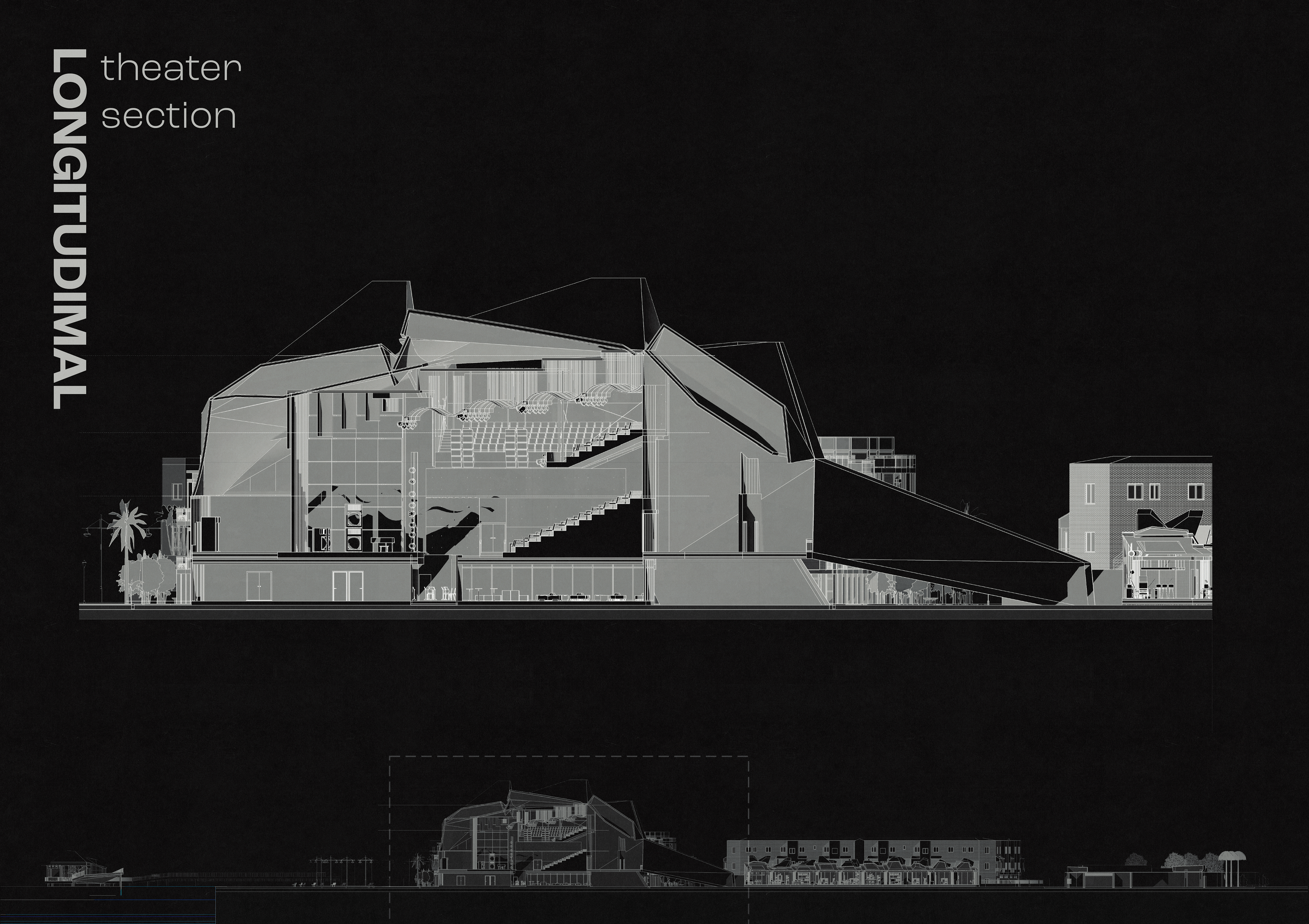
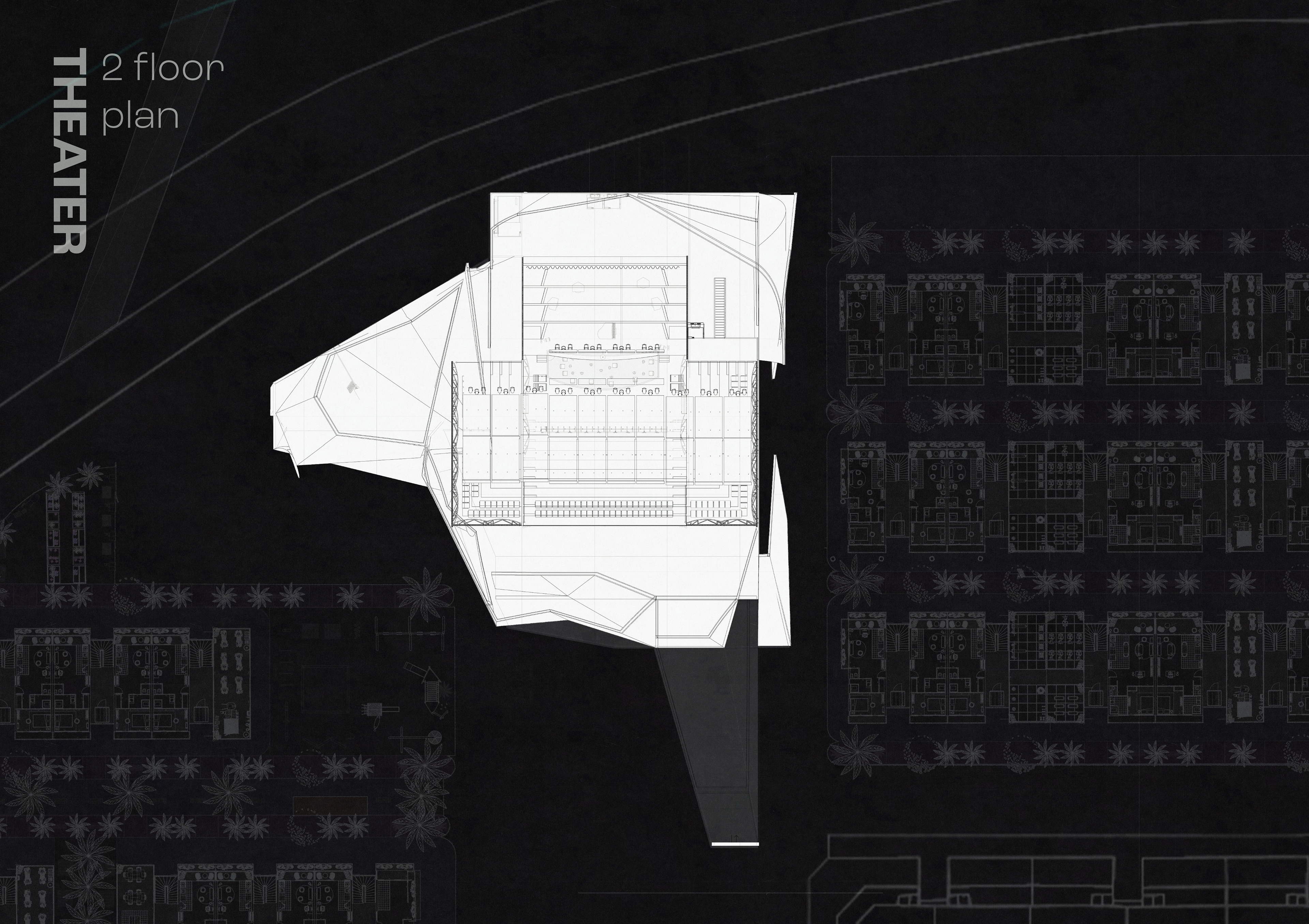
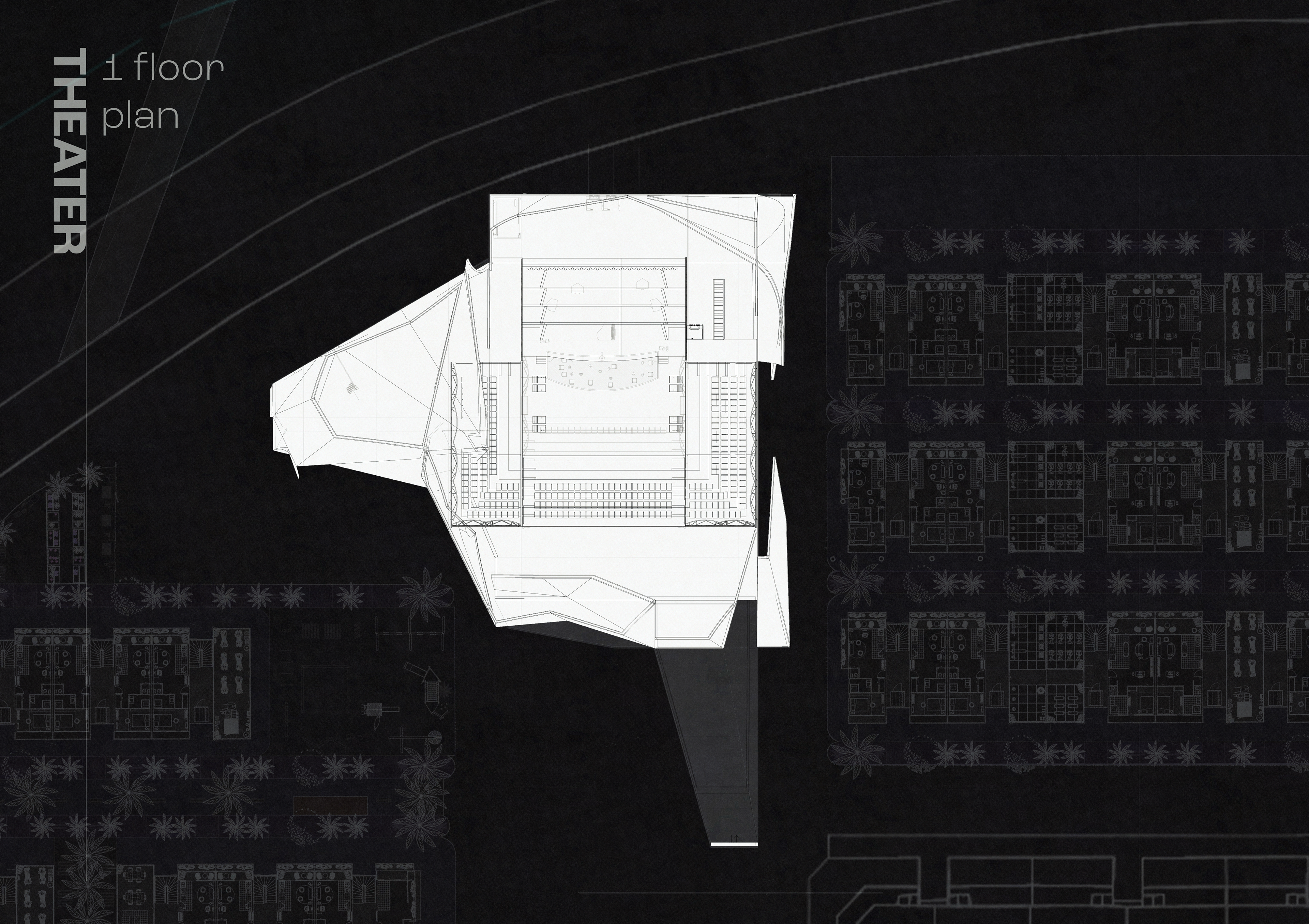
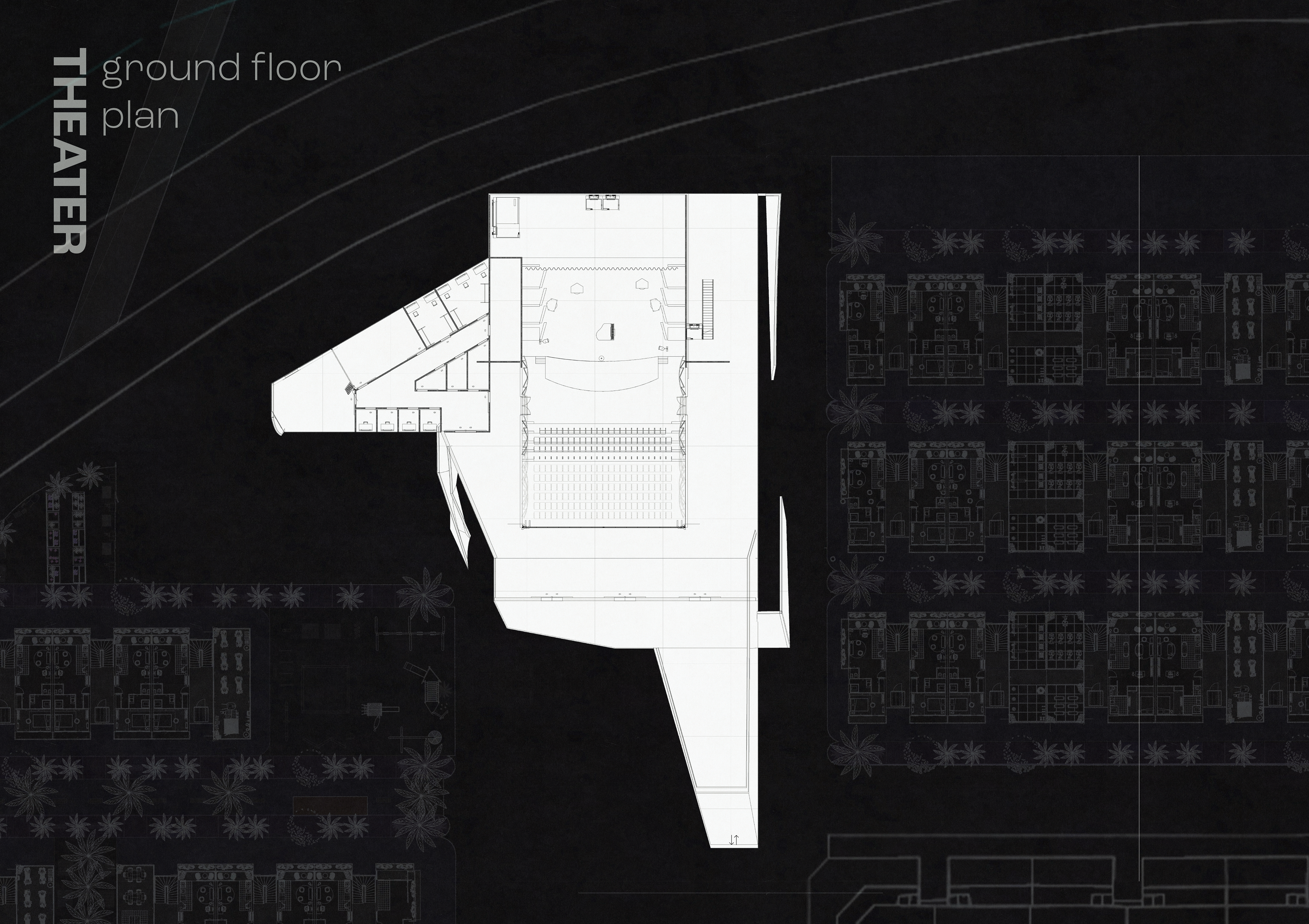
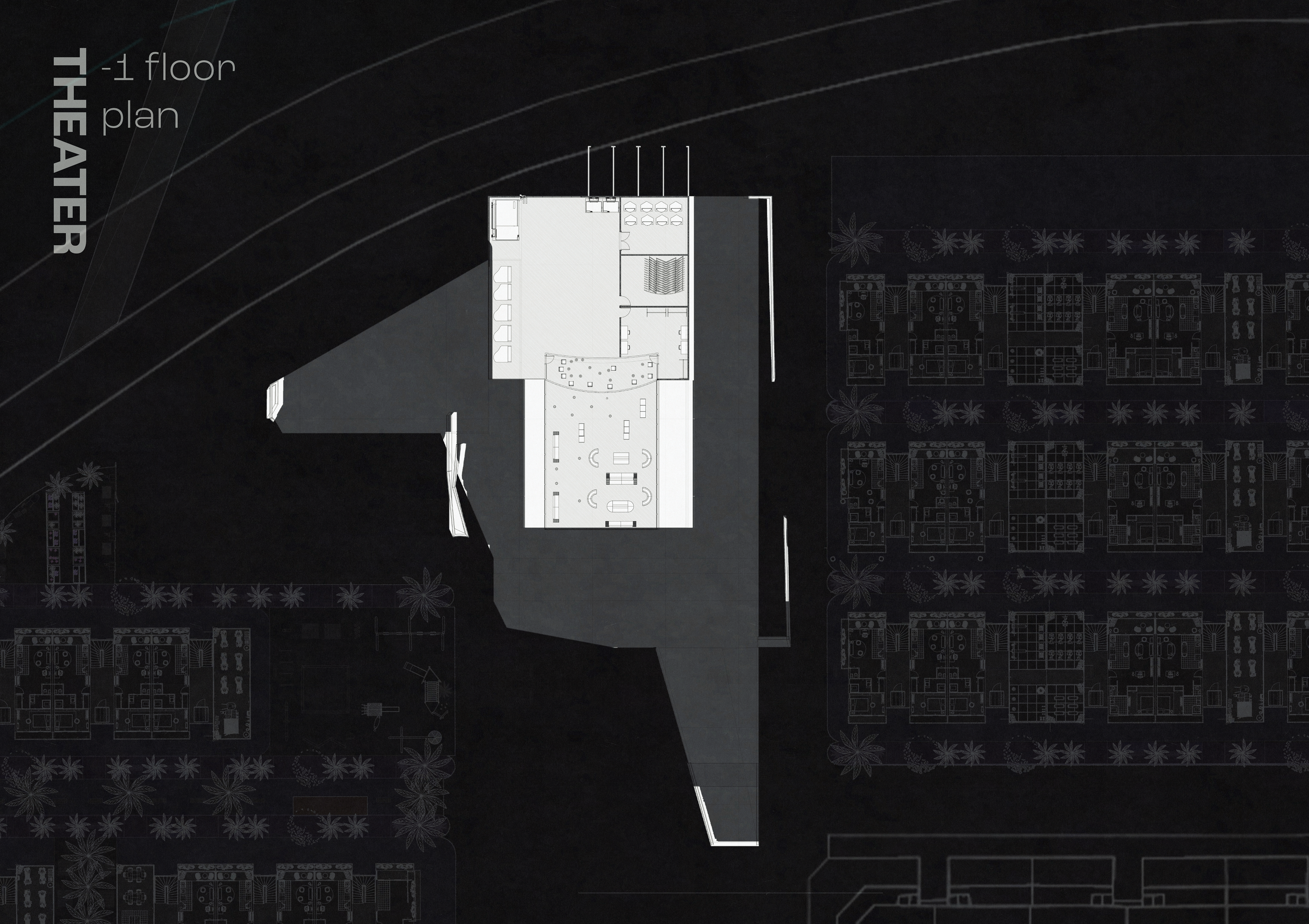
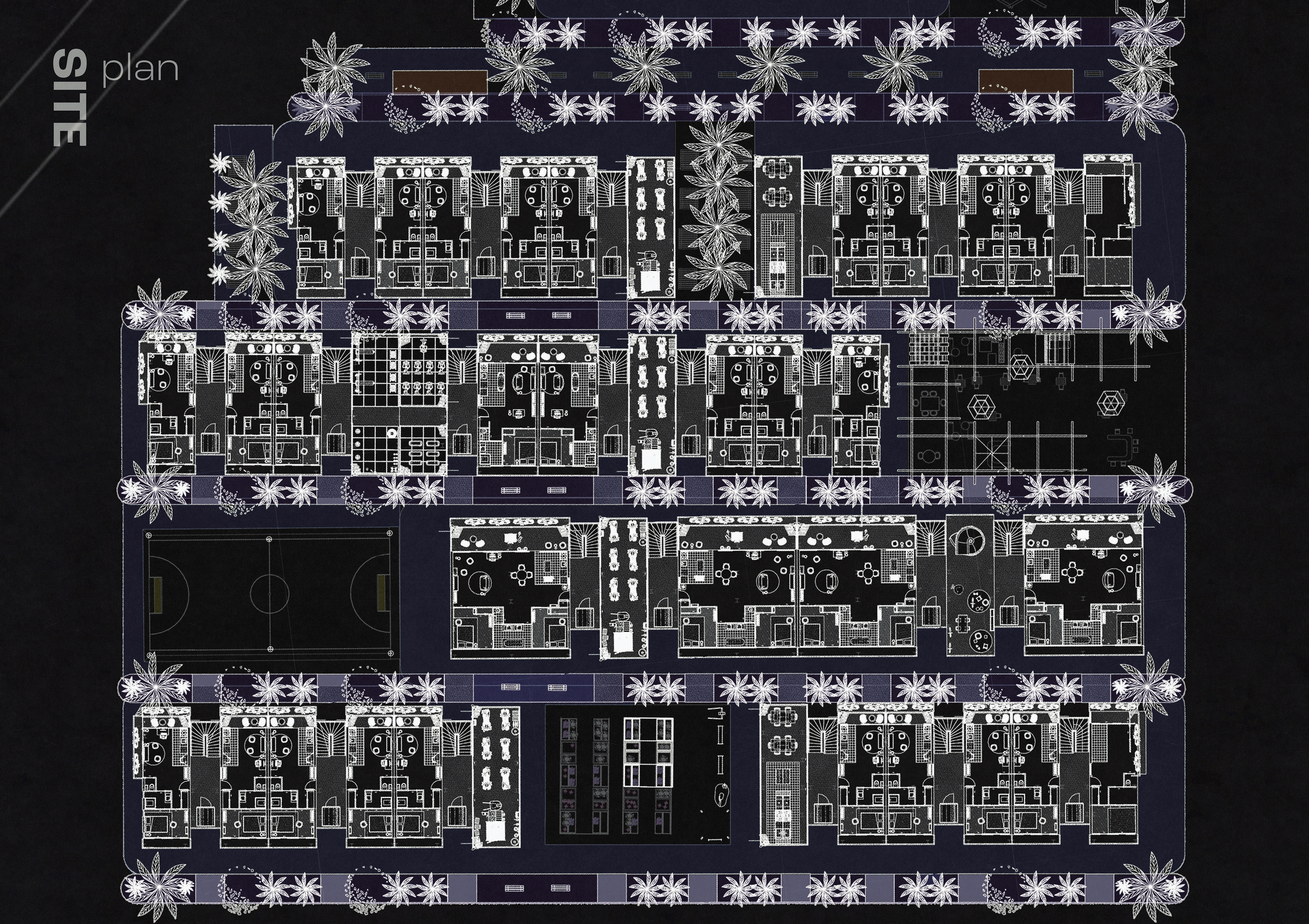
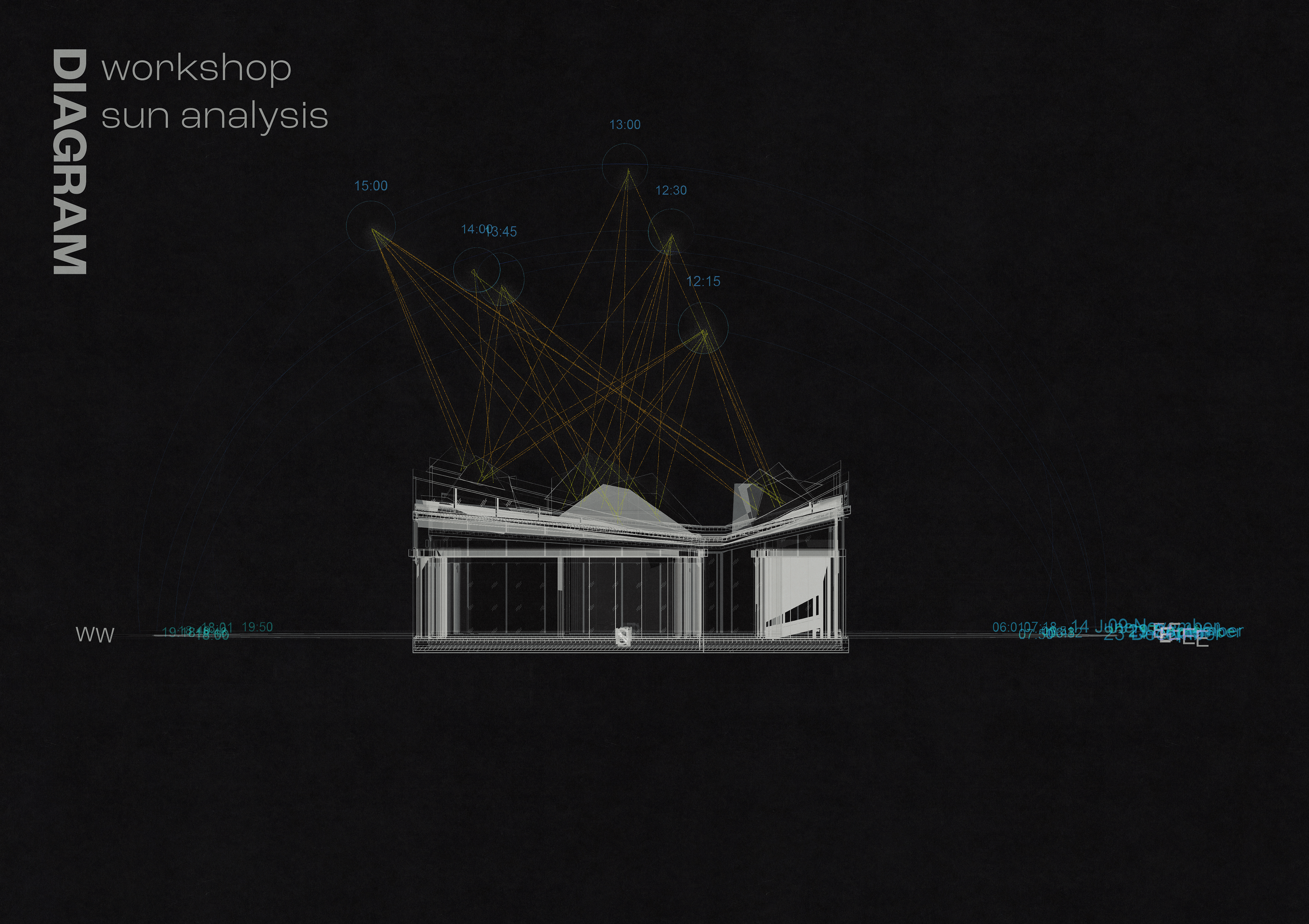
Rather than treating the site as a conventional tourism strip, the proposal reimagines it as a low-rise, interconnected urban fabric shaped by local habits, topography, and social use. The masterplan combines adaptable housing for residents, seasonal workers, and temporary visitors with shared rooftops, agricultural spaces, coworking, fitness areas, and cultural infrastructure. At its centre, the theatre acts as both a public landmark and a vessel for performance, production, and collective gathering, defined by chimney-like skylights that bring light deep into the interior and establish a distinct architectural identity on the waterfront.
ANALYSIS
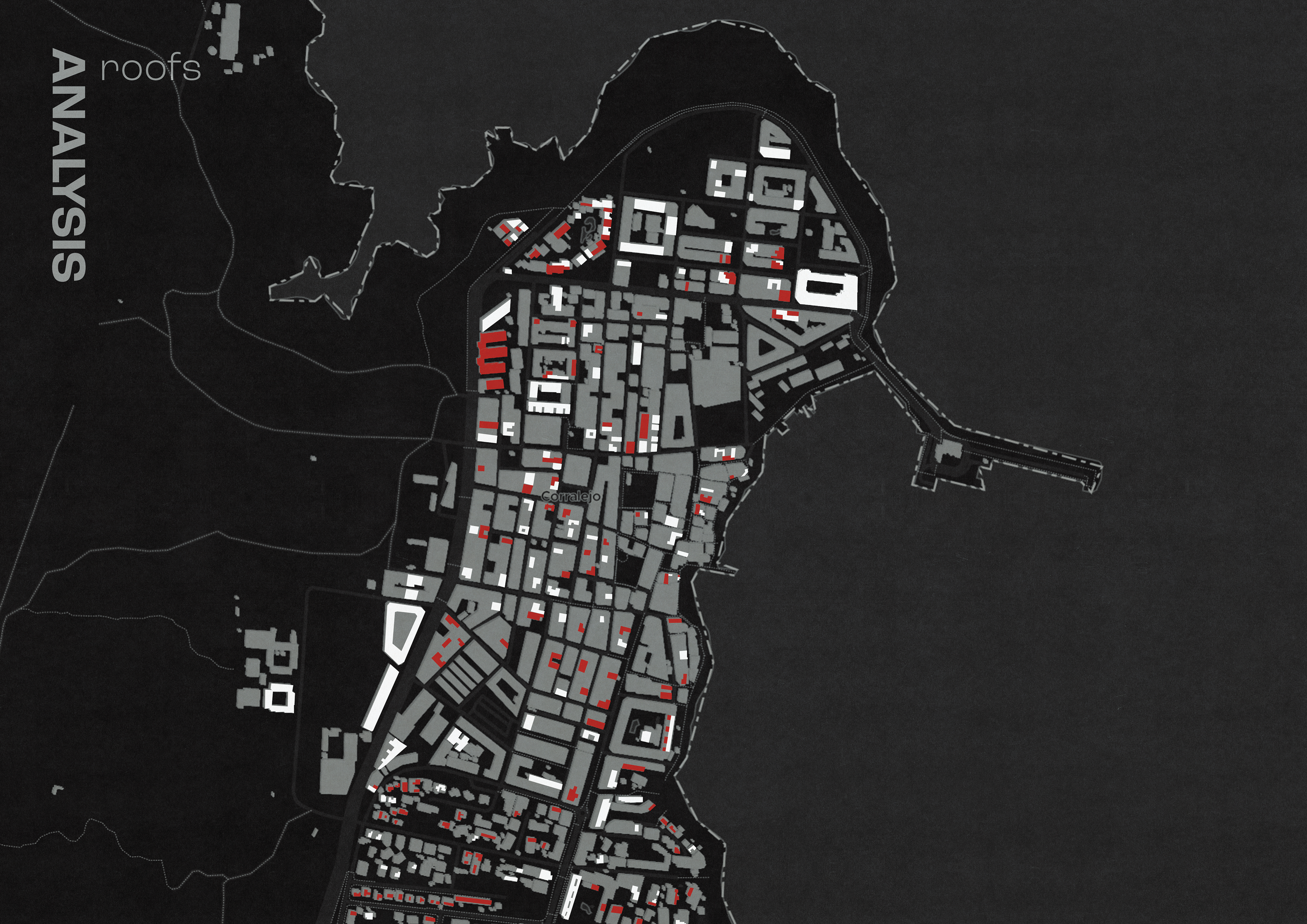
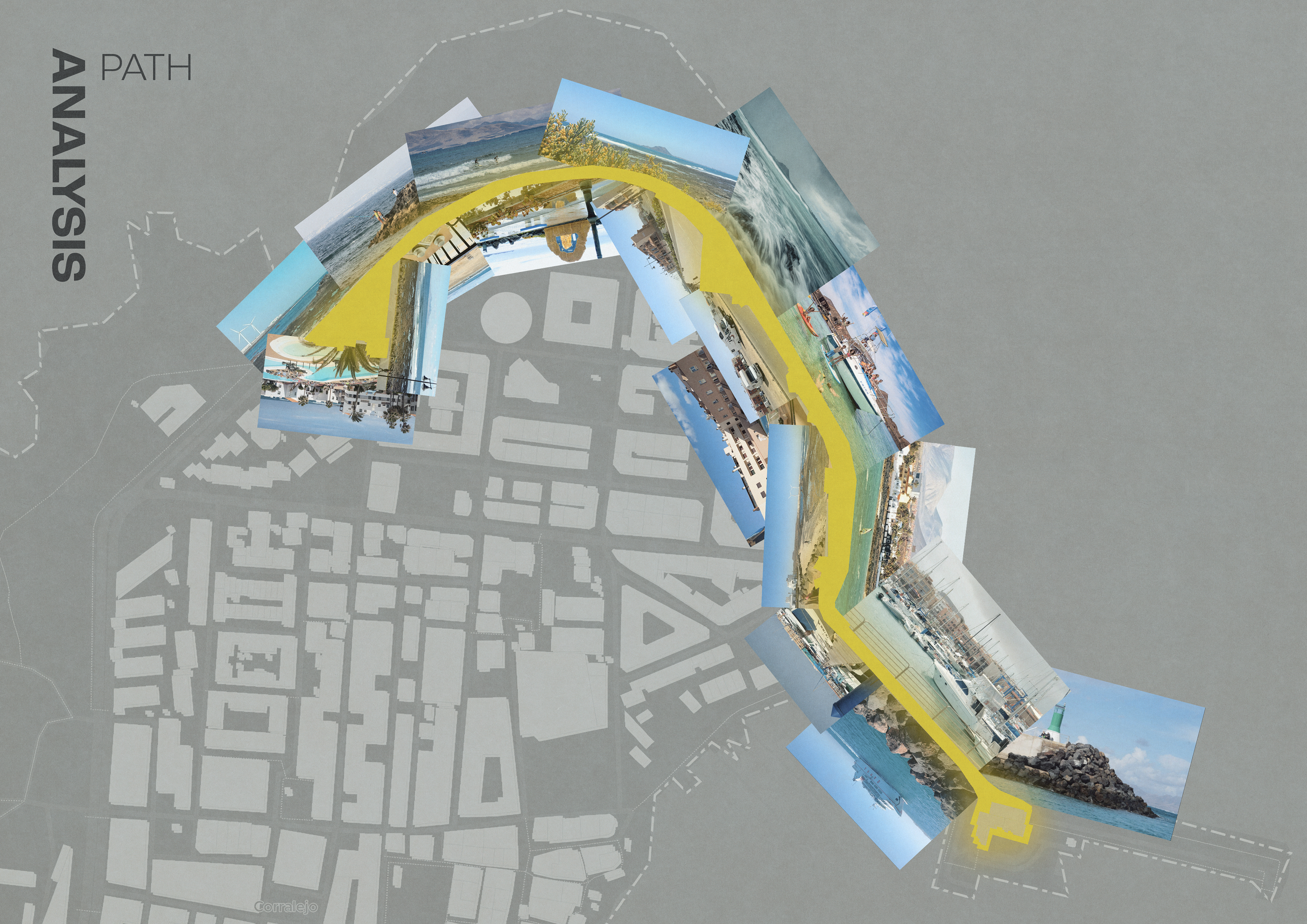
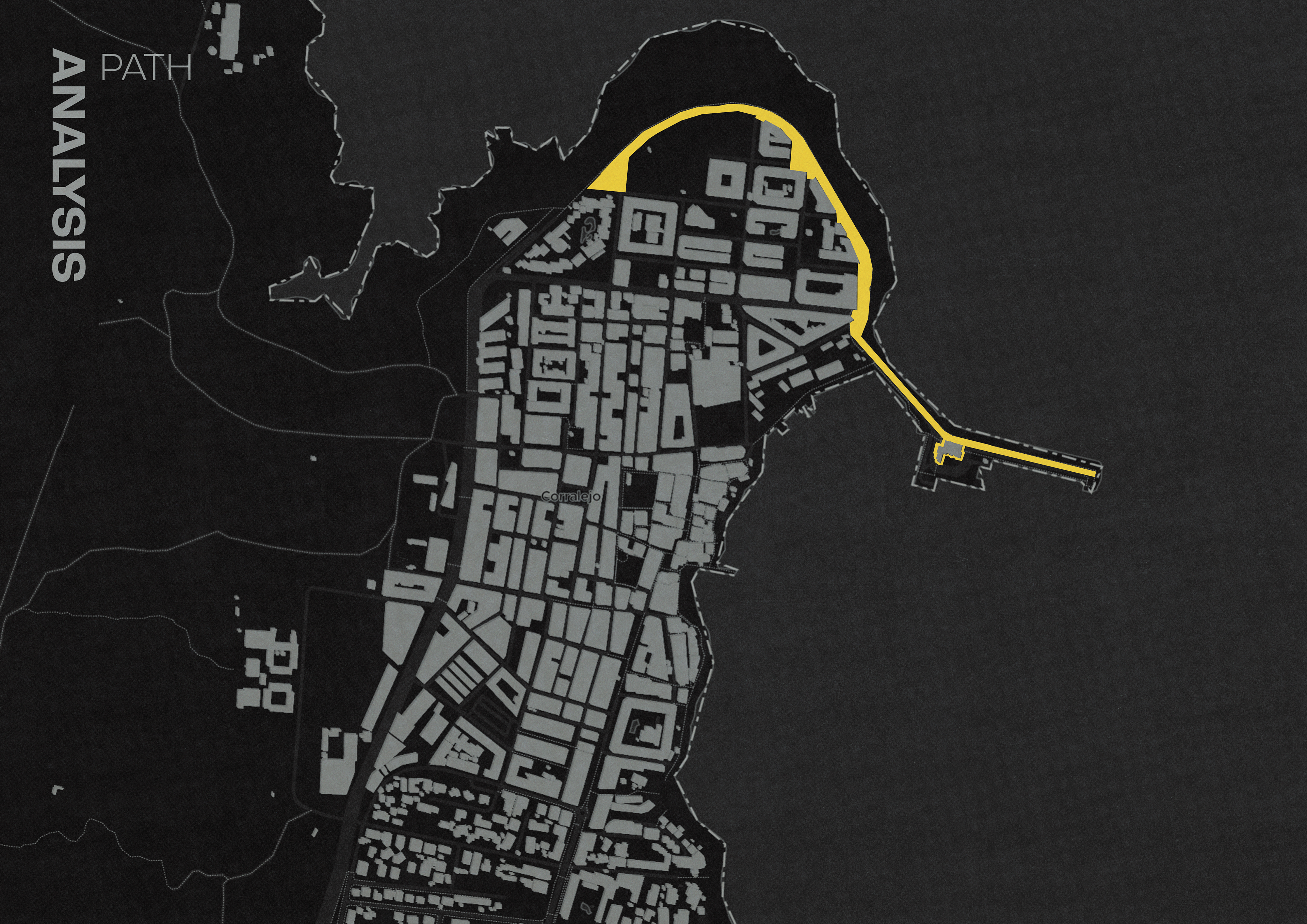
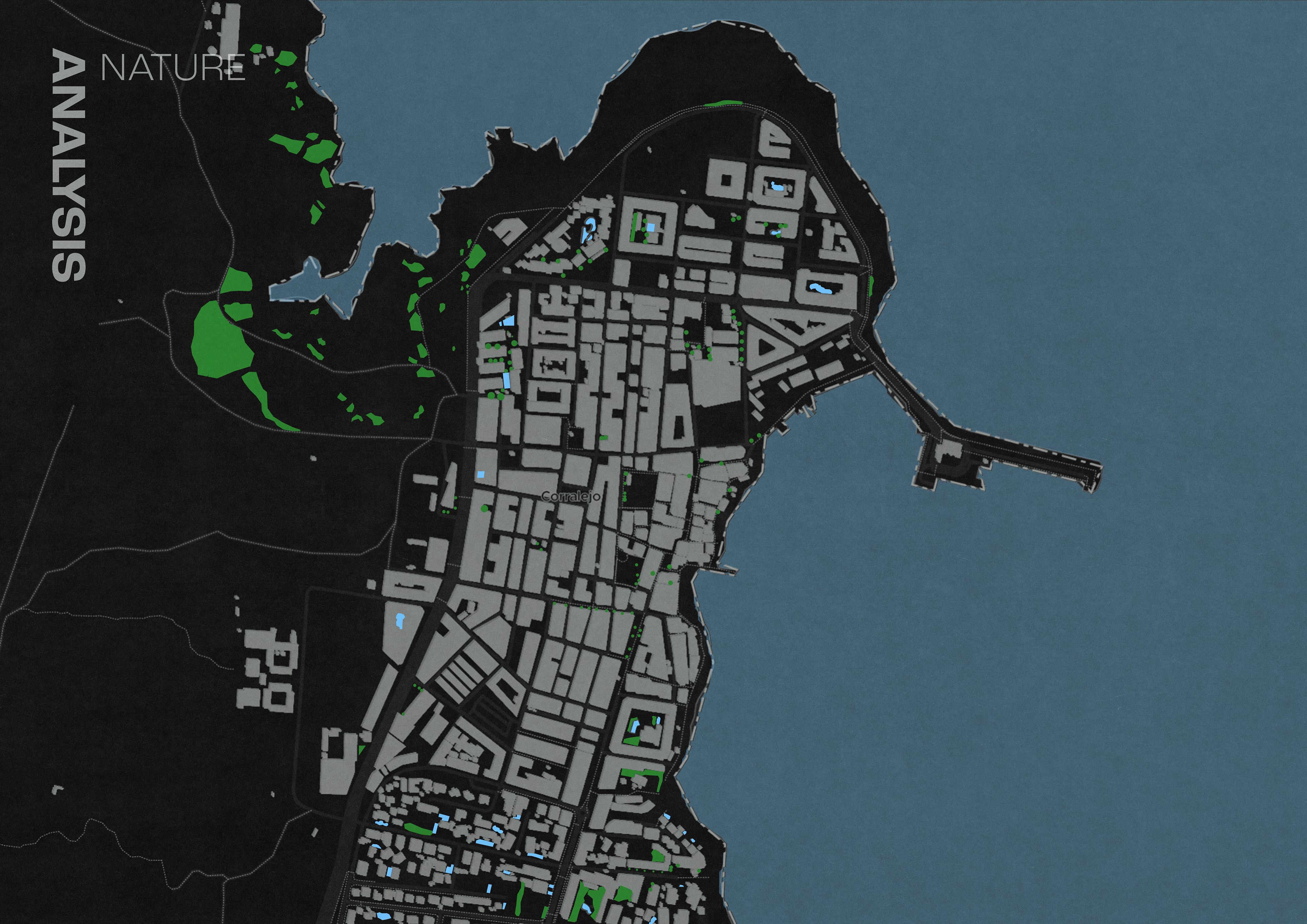
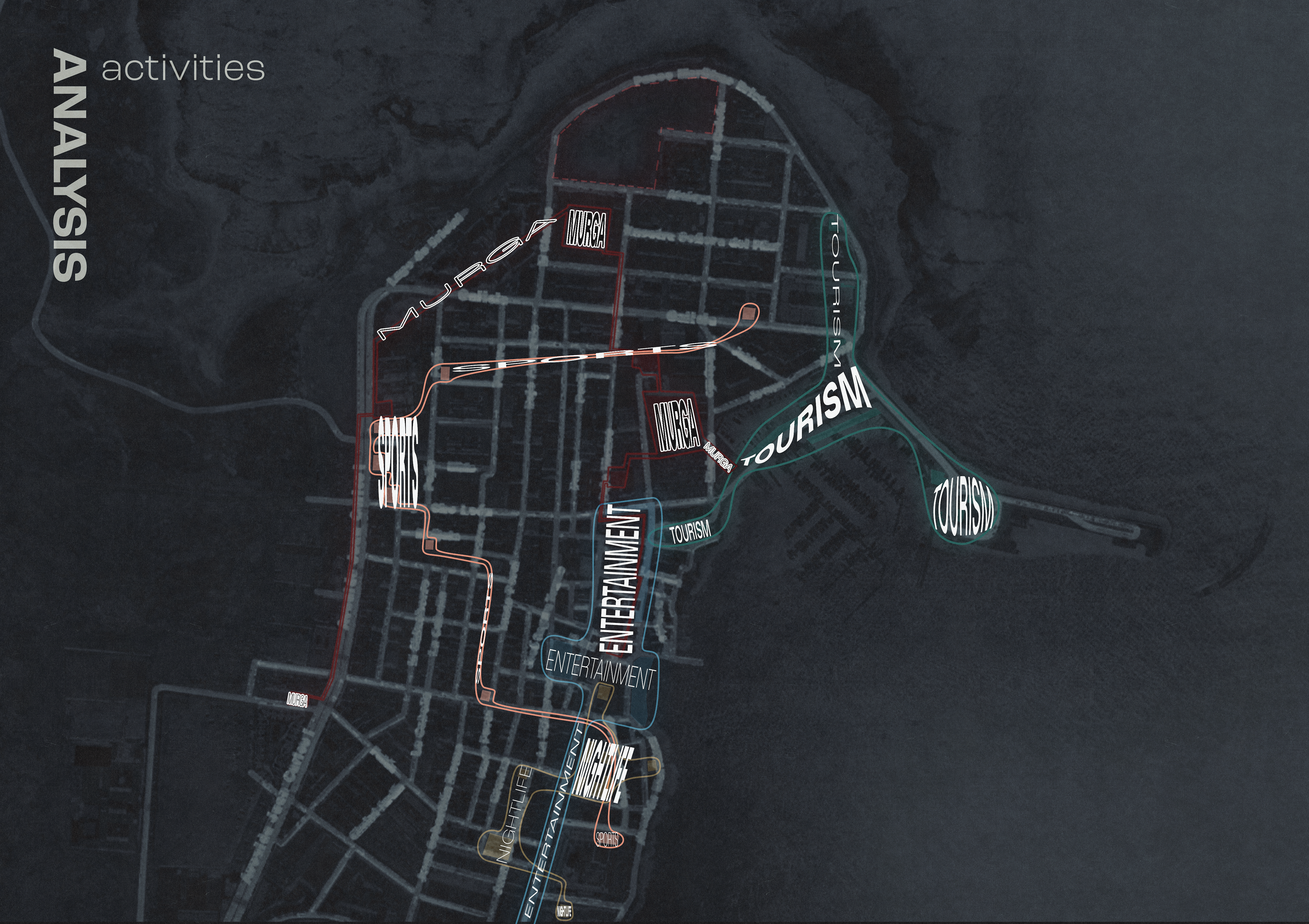
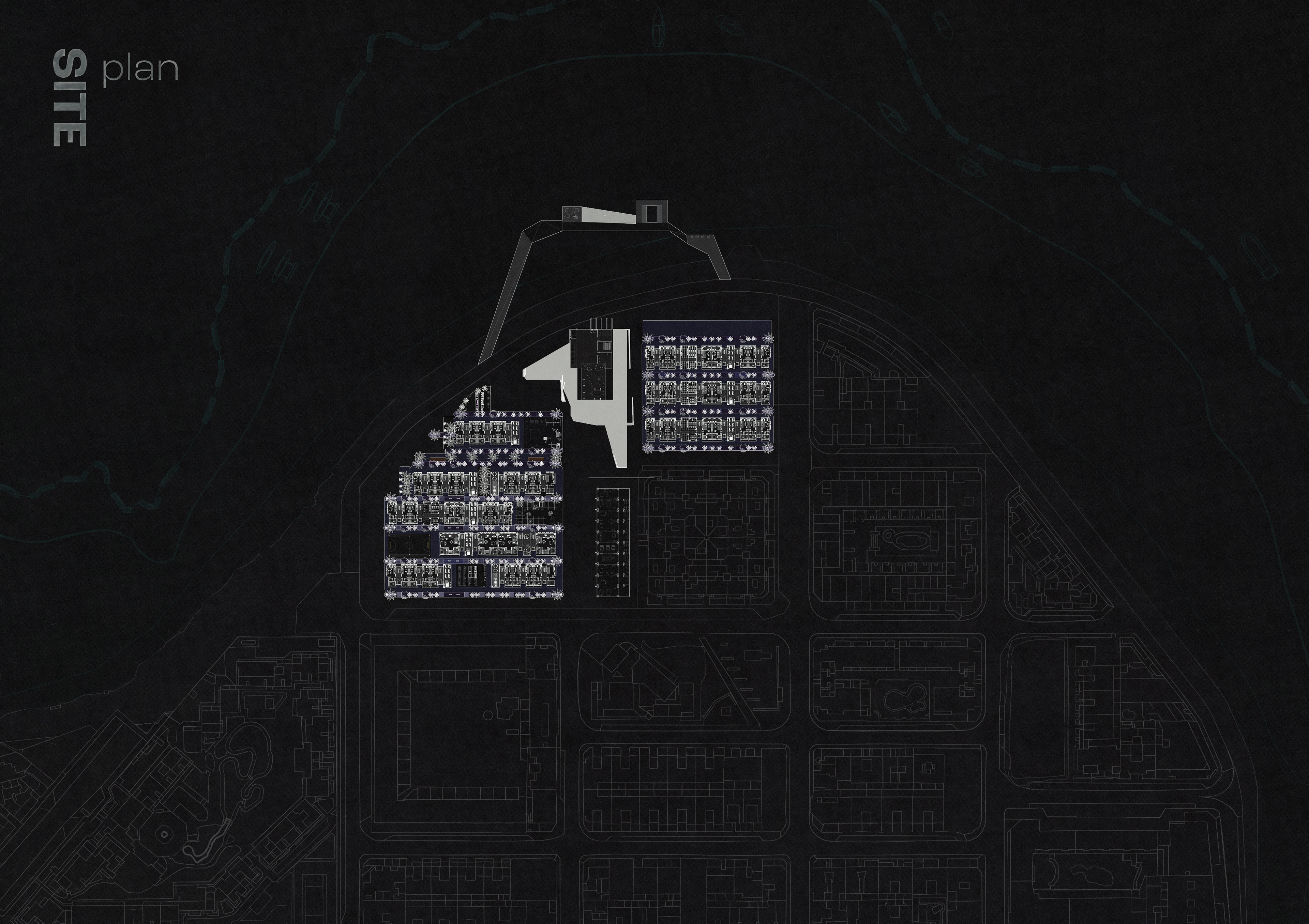
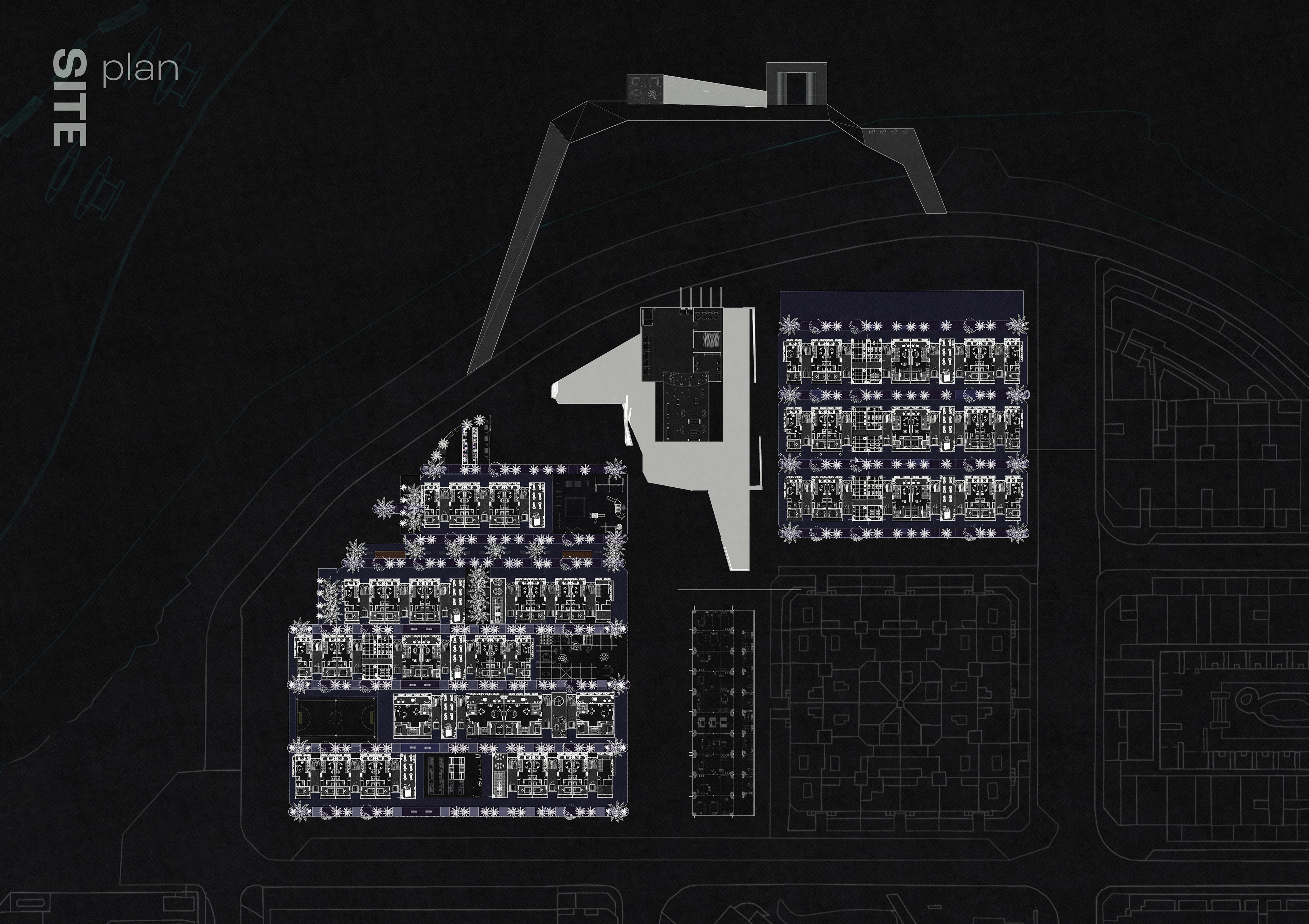
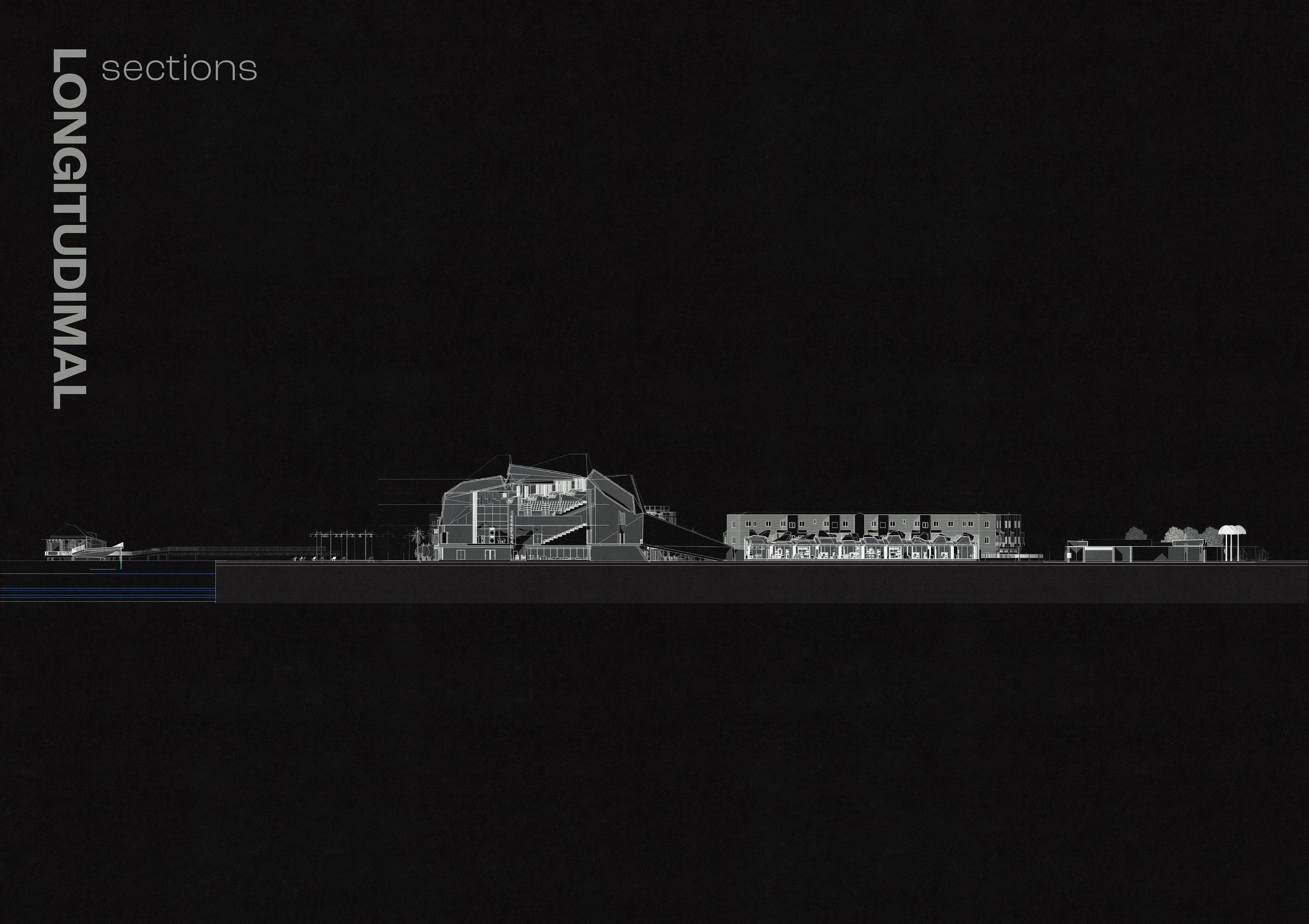
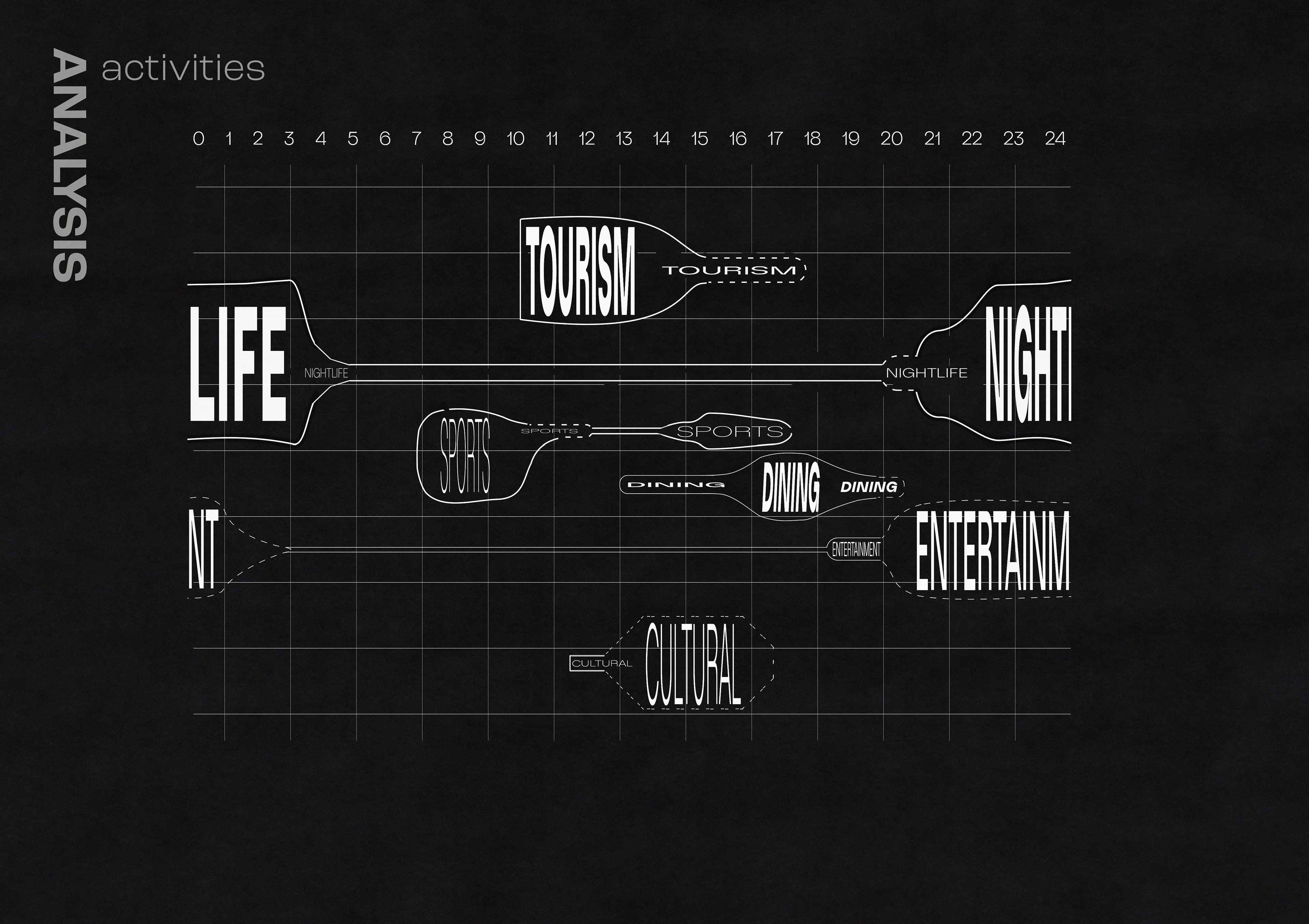
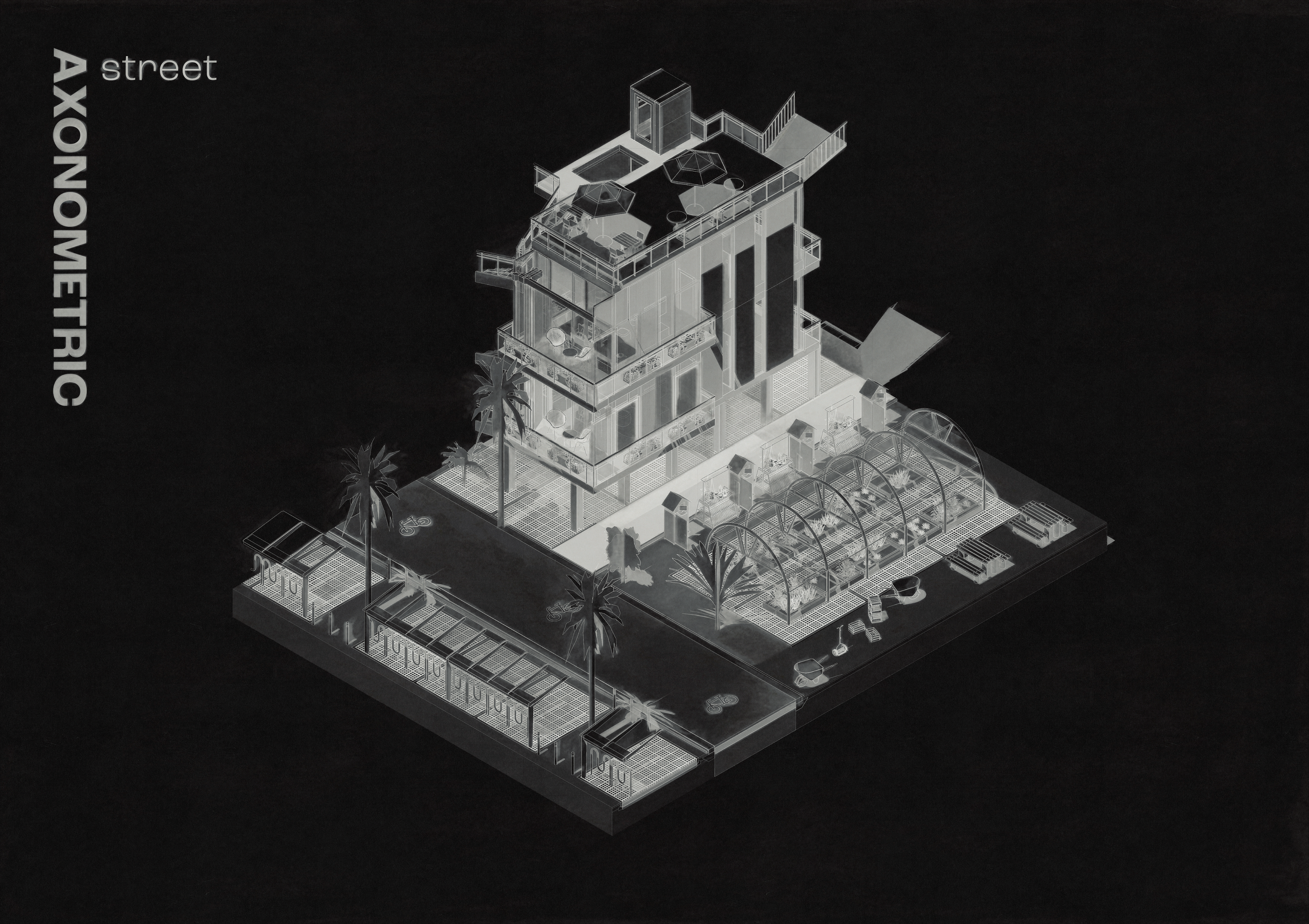
The project began with an analysis of Corralejo’s seafront as a place suspended between activity and abandonment - a coastal edge where fragments of public life, informal movement, tourism pressure, and local identity coexist without a fully coherent spatial framework. One of the key findings was the presence of a semi-abandoned waterfront path, which became the conceptual and geometric foundation of the proposal. This trace was used to define a grid system that organizes the placement of living clusters, public programs, and the theatre complex across the site.
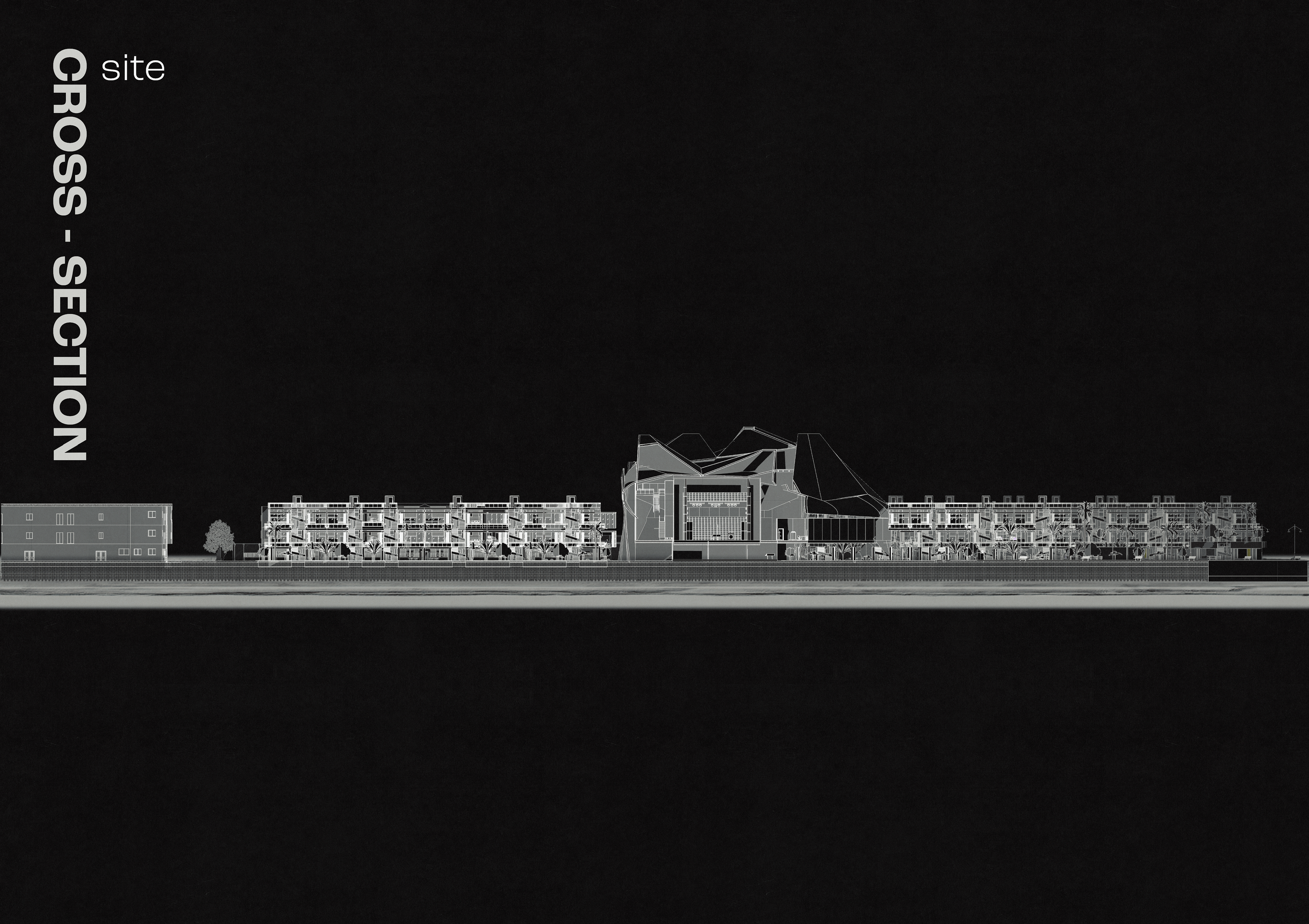
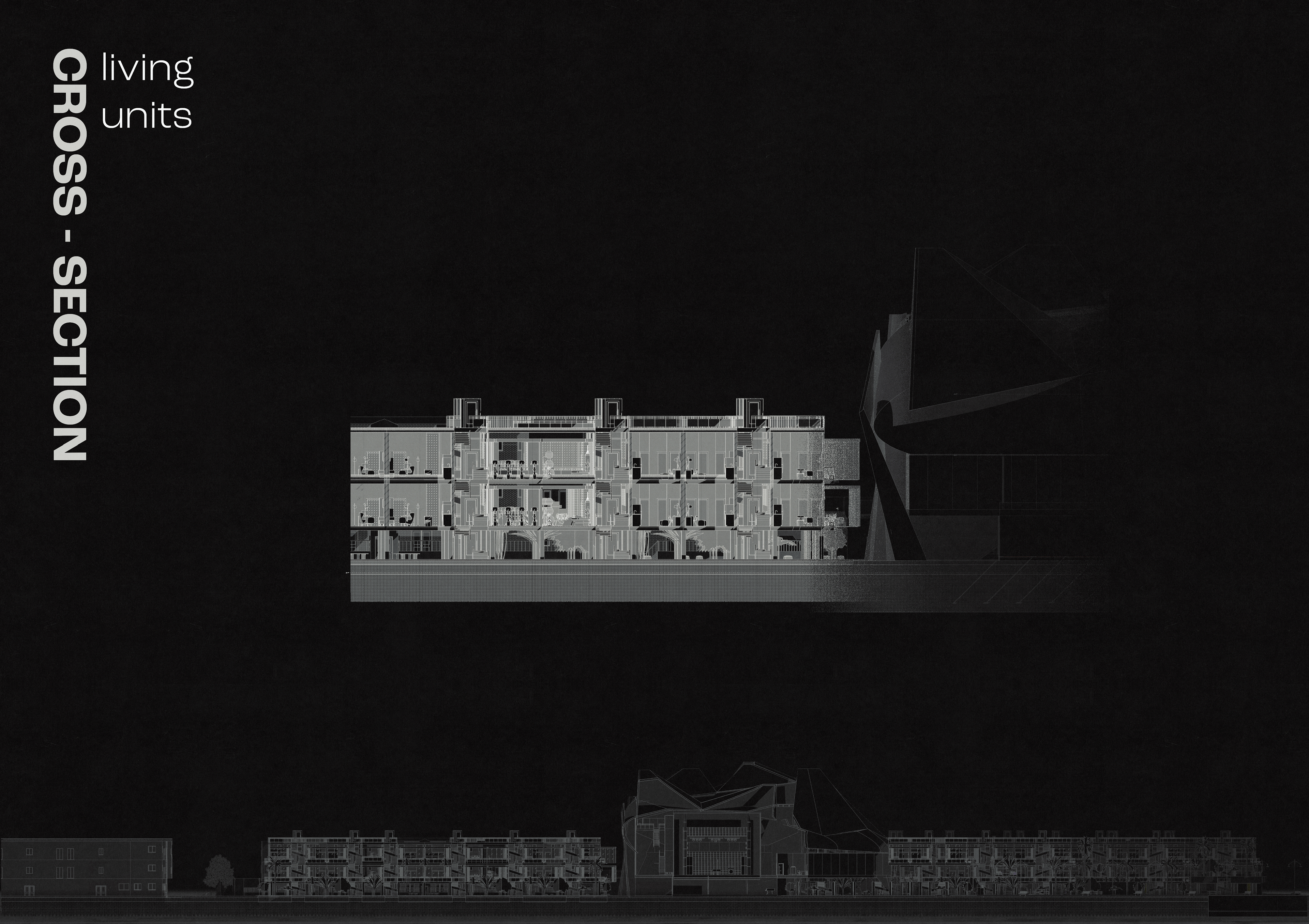
A second key condition emerged through the surrounding landscape. Building heights were intentionally limited by the profile of nearby natural elements and hills, ensuring that the project remained visually subordinate to the territory rather than competing with it. This produced a restrained, horizontal architecture that grows out of the site instead of sitting on top of it.
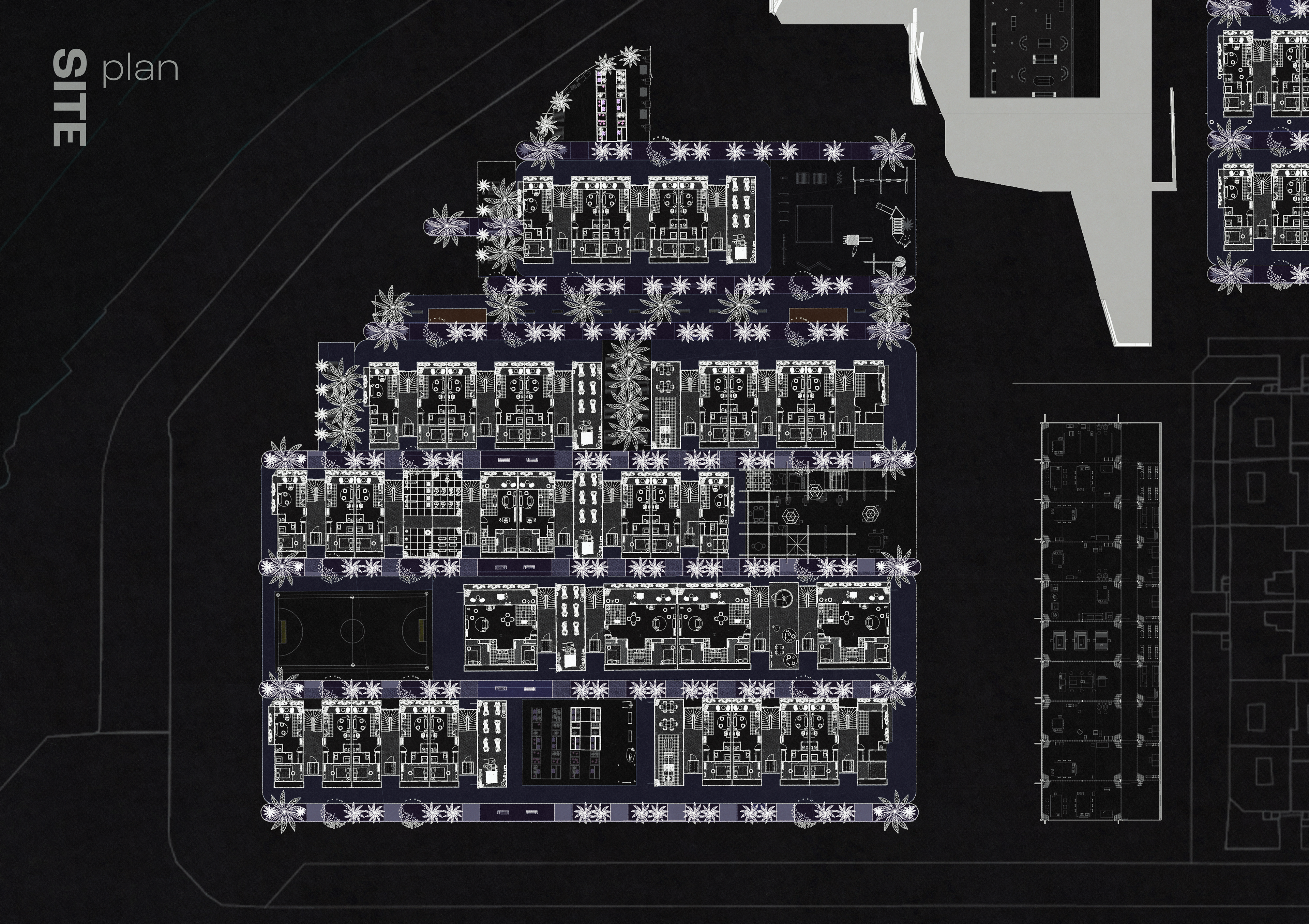
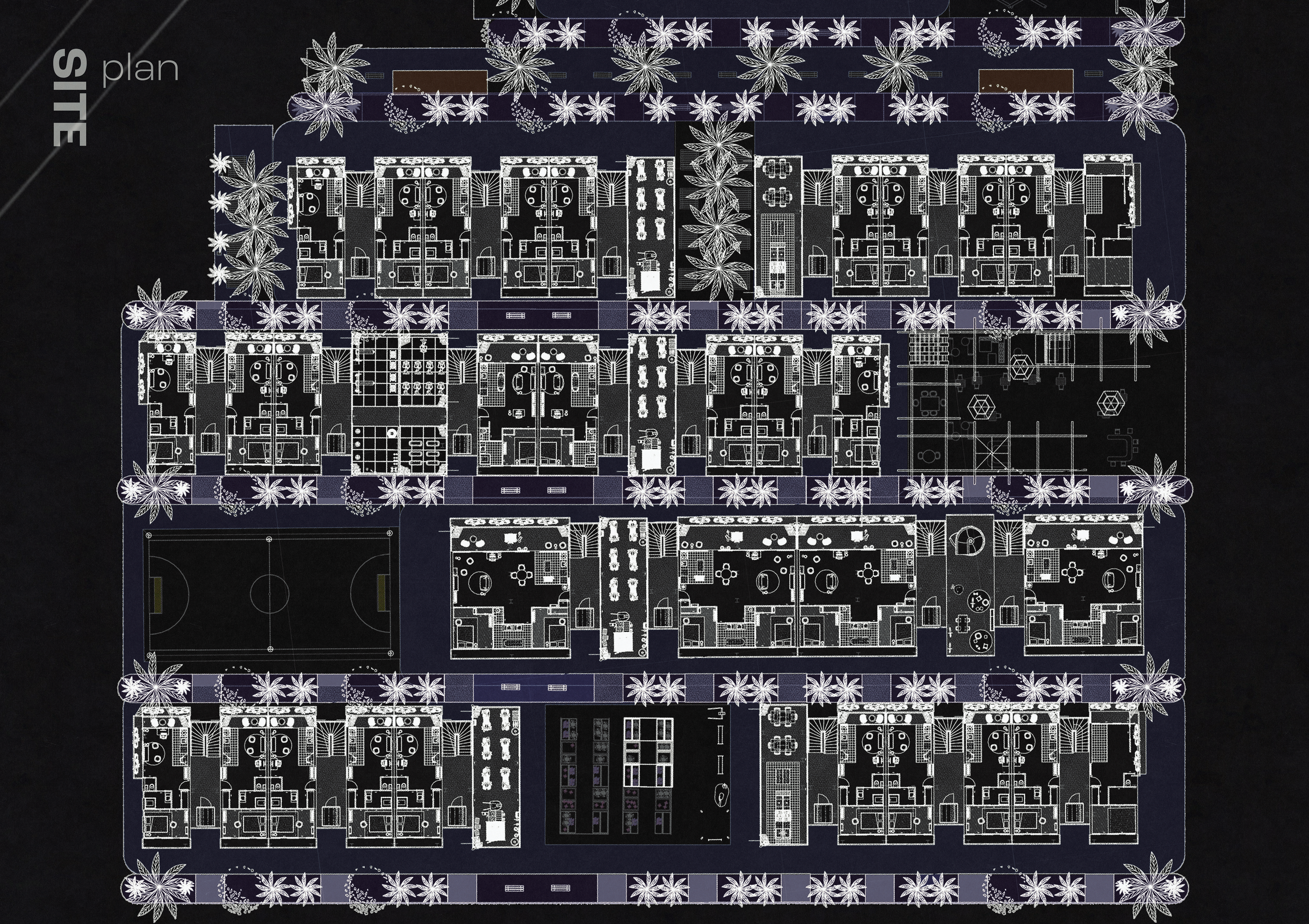
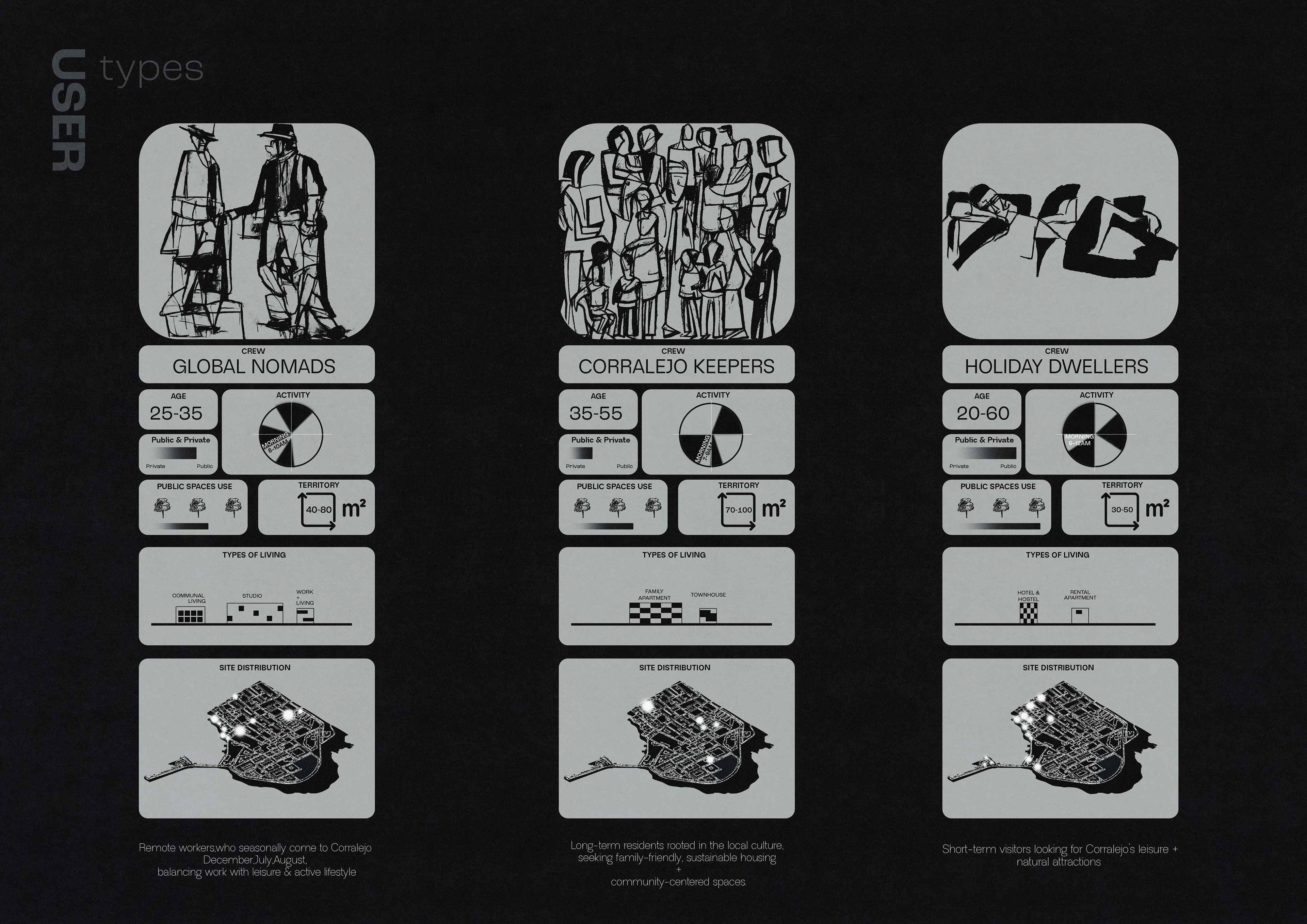
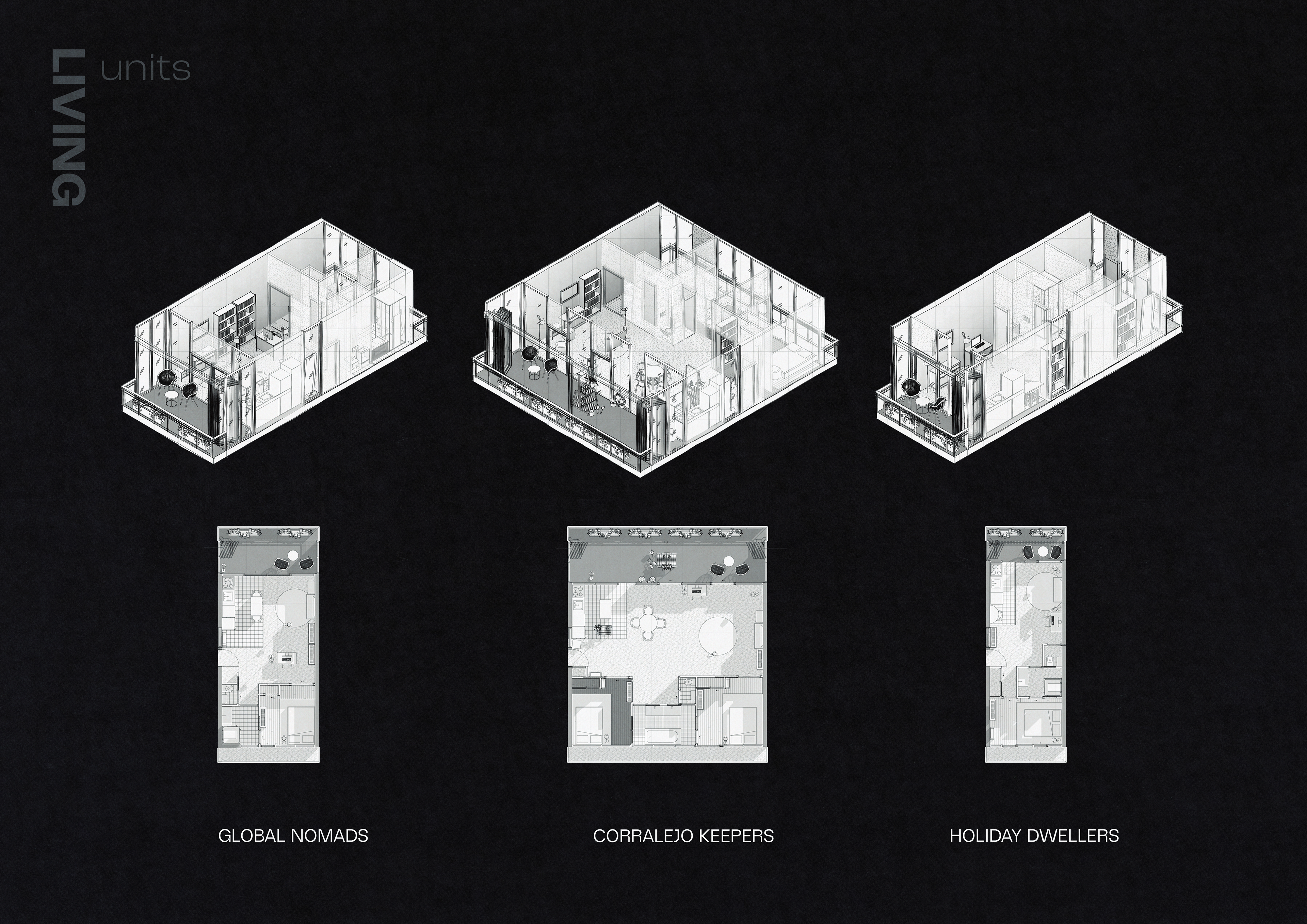
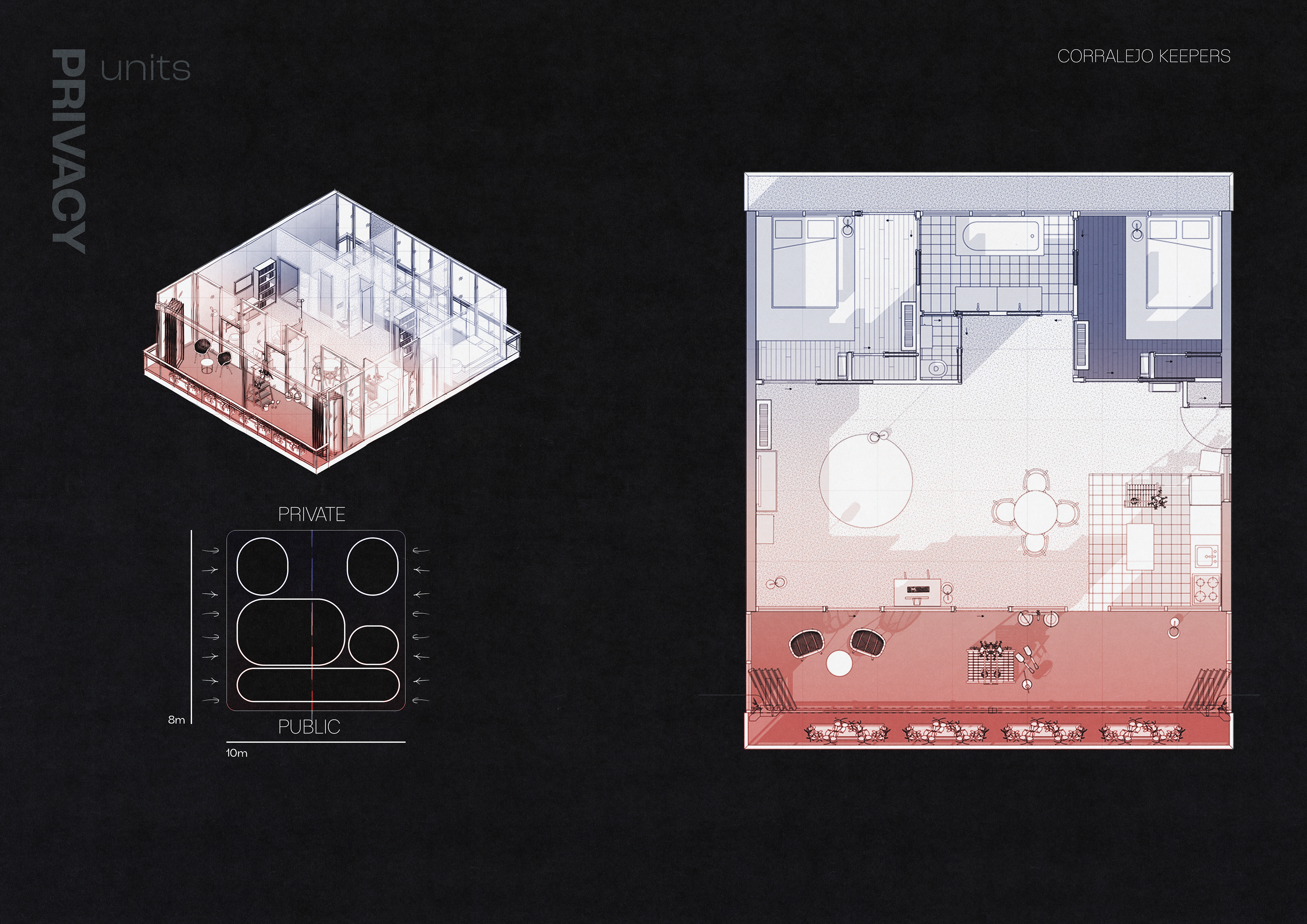
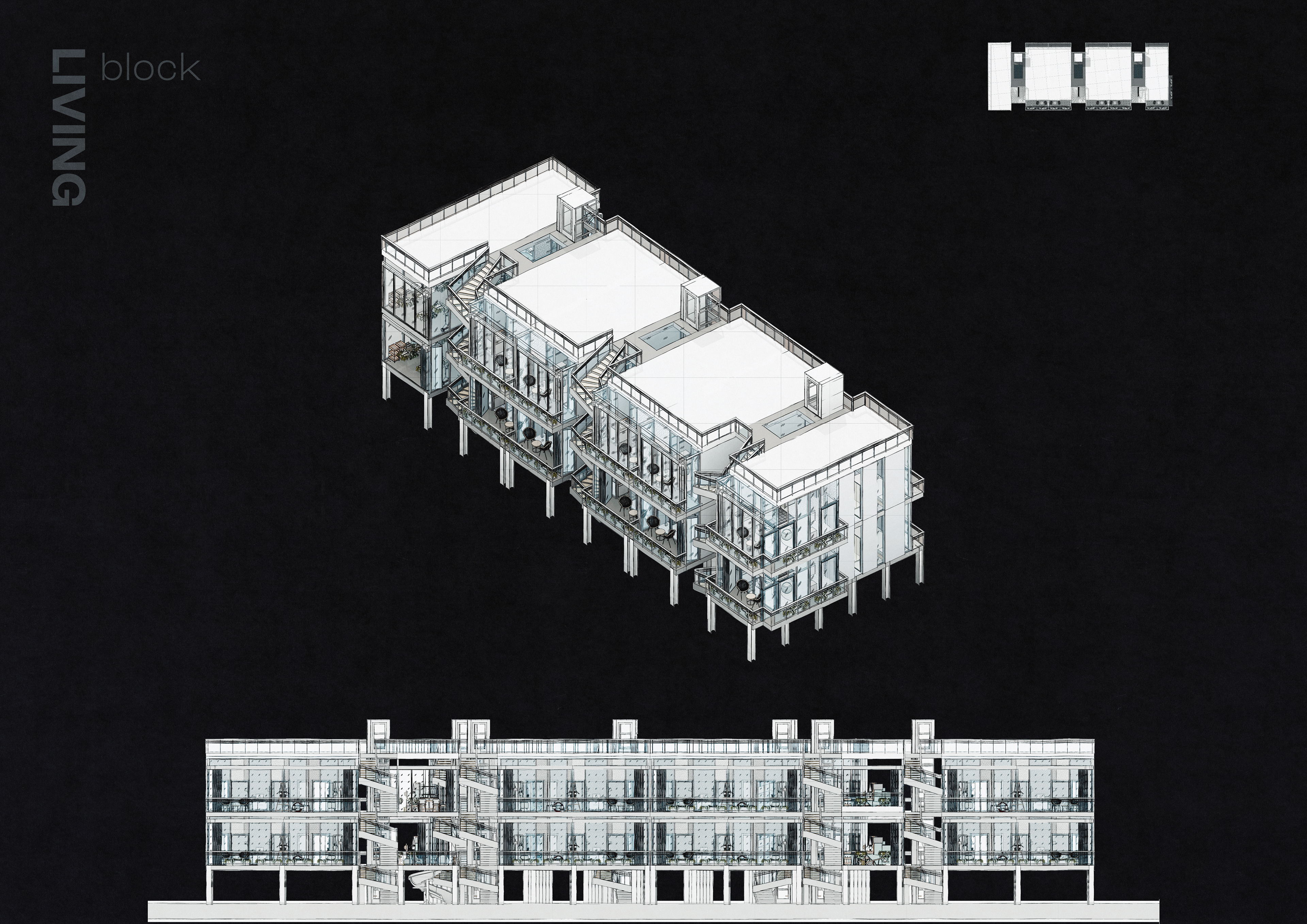
The housing strategy responds to the mixed social reality of Corralejo. The proposal accommodates different user groups - local residents, seasonal workers moving between countries, and short-term visitors - through a modular residential system that allows units to adapt over time. Apartments can be reconfigured or exchanged as family structures shift, enabling growth without displacement and making the community more resilient to changing domestic needs.
LIVING
SITE
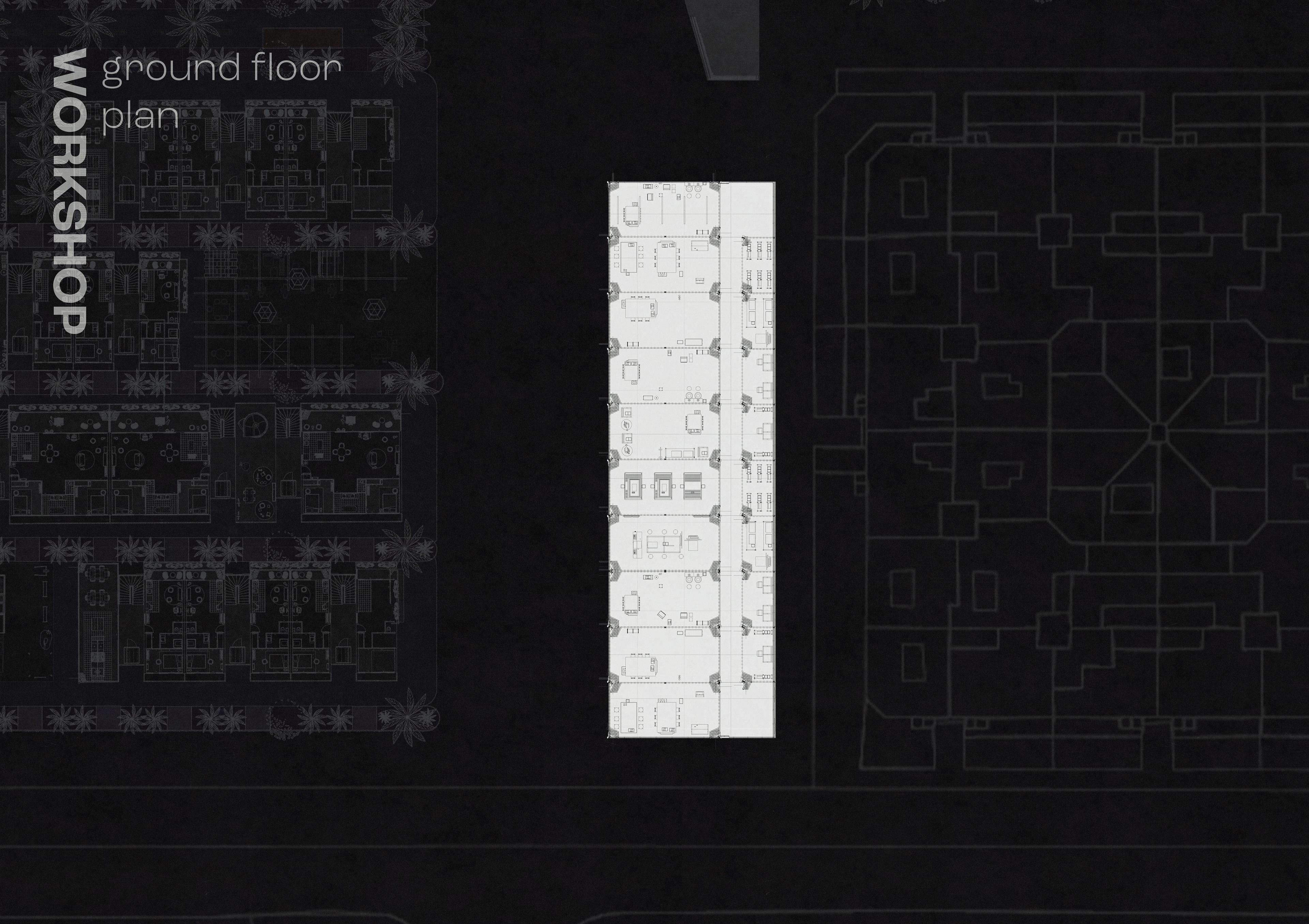
WORKSHOPS
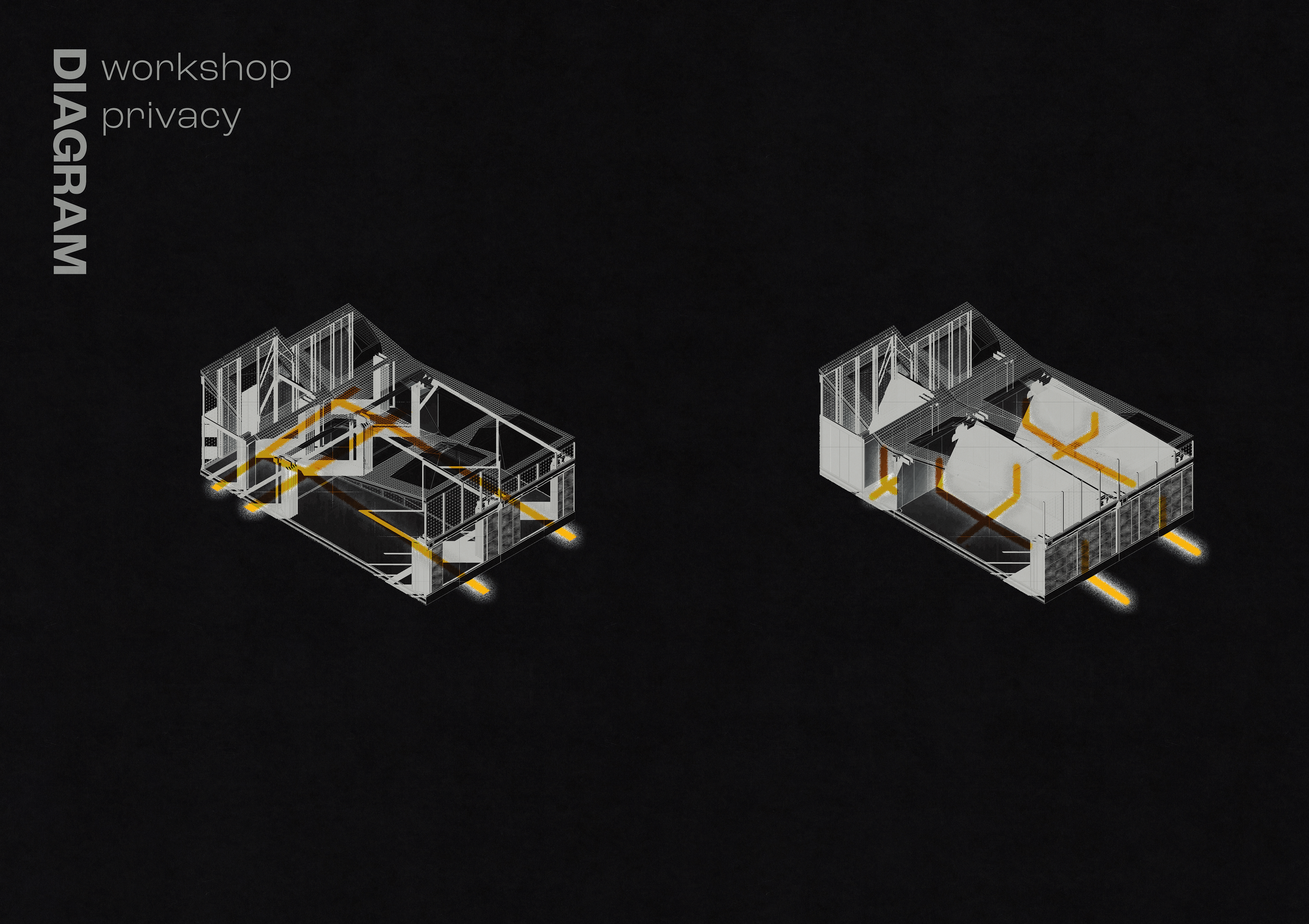
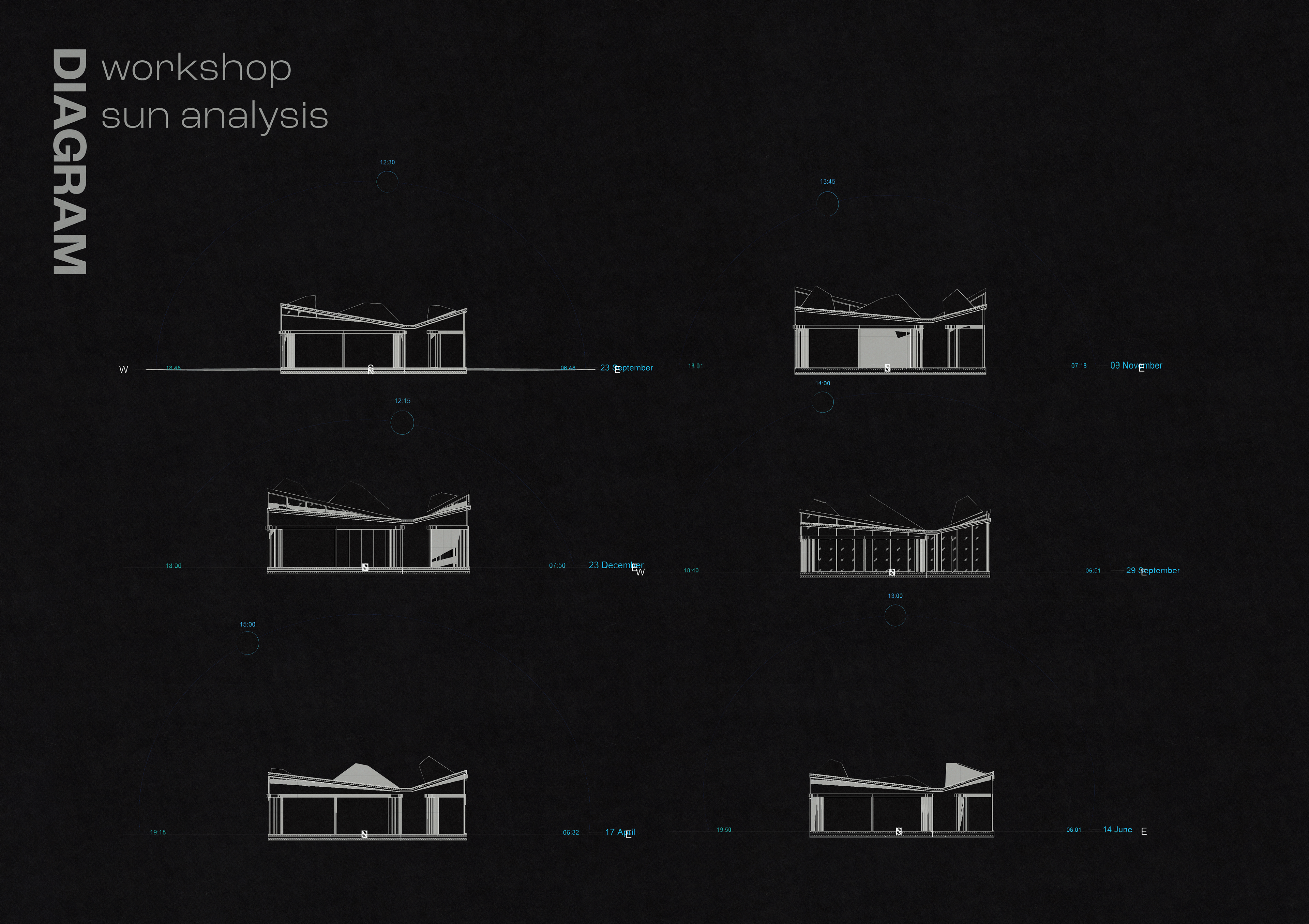
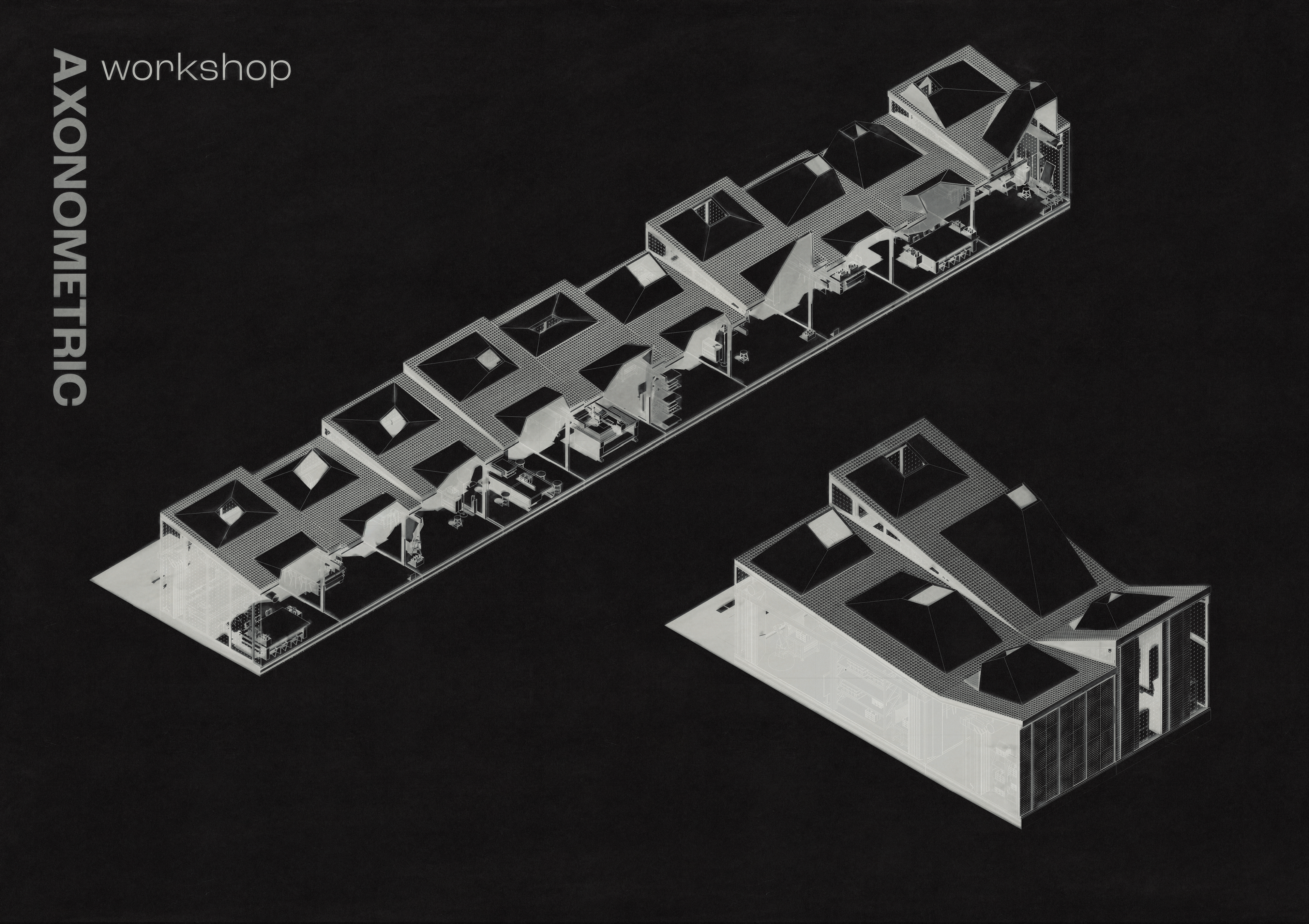
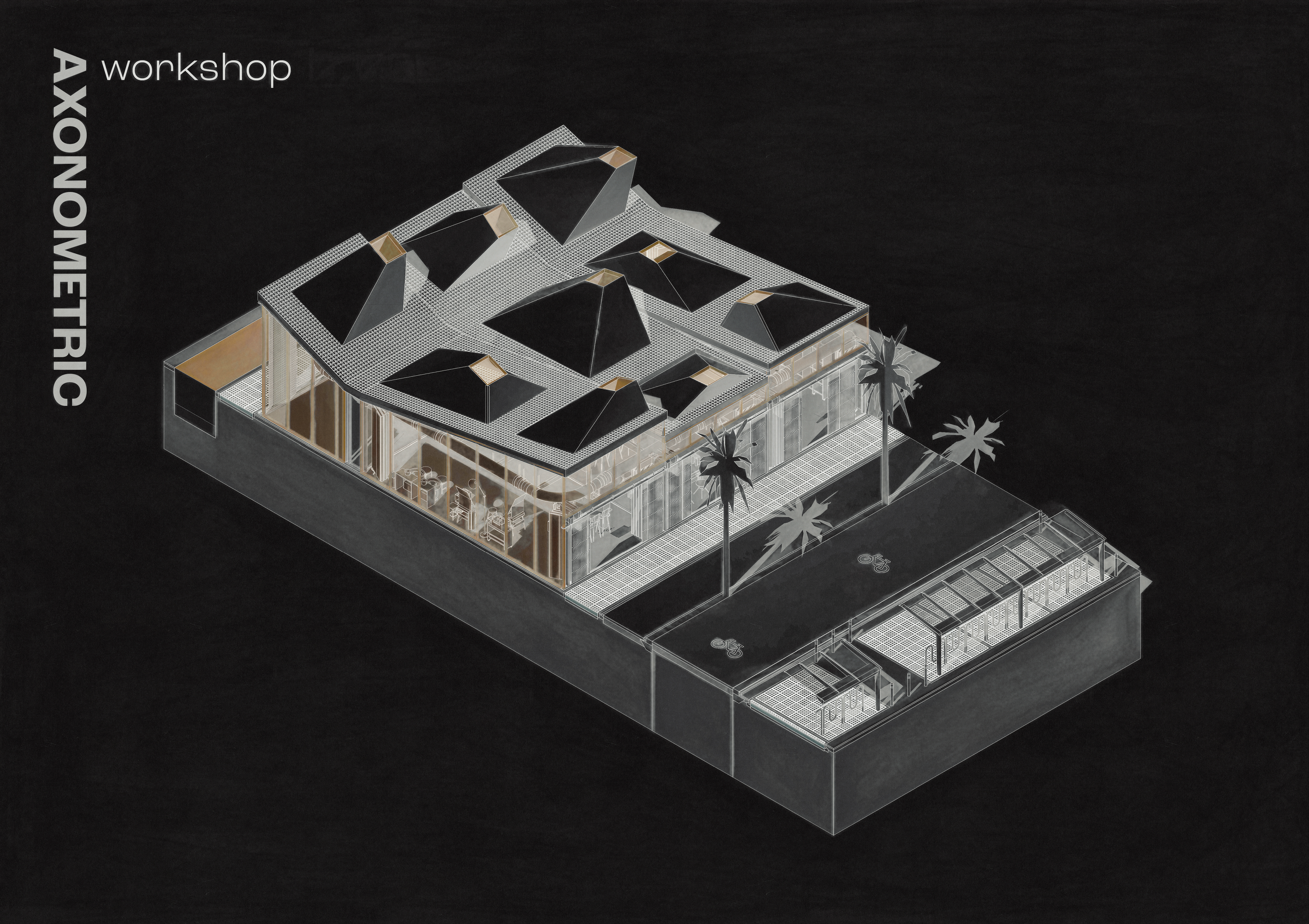
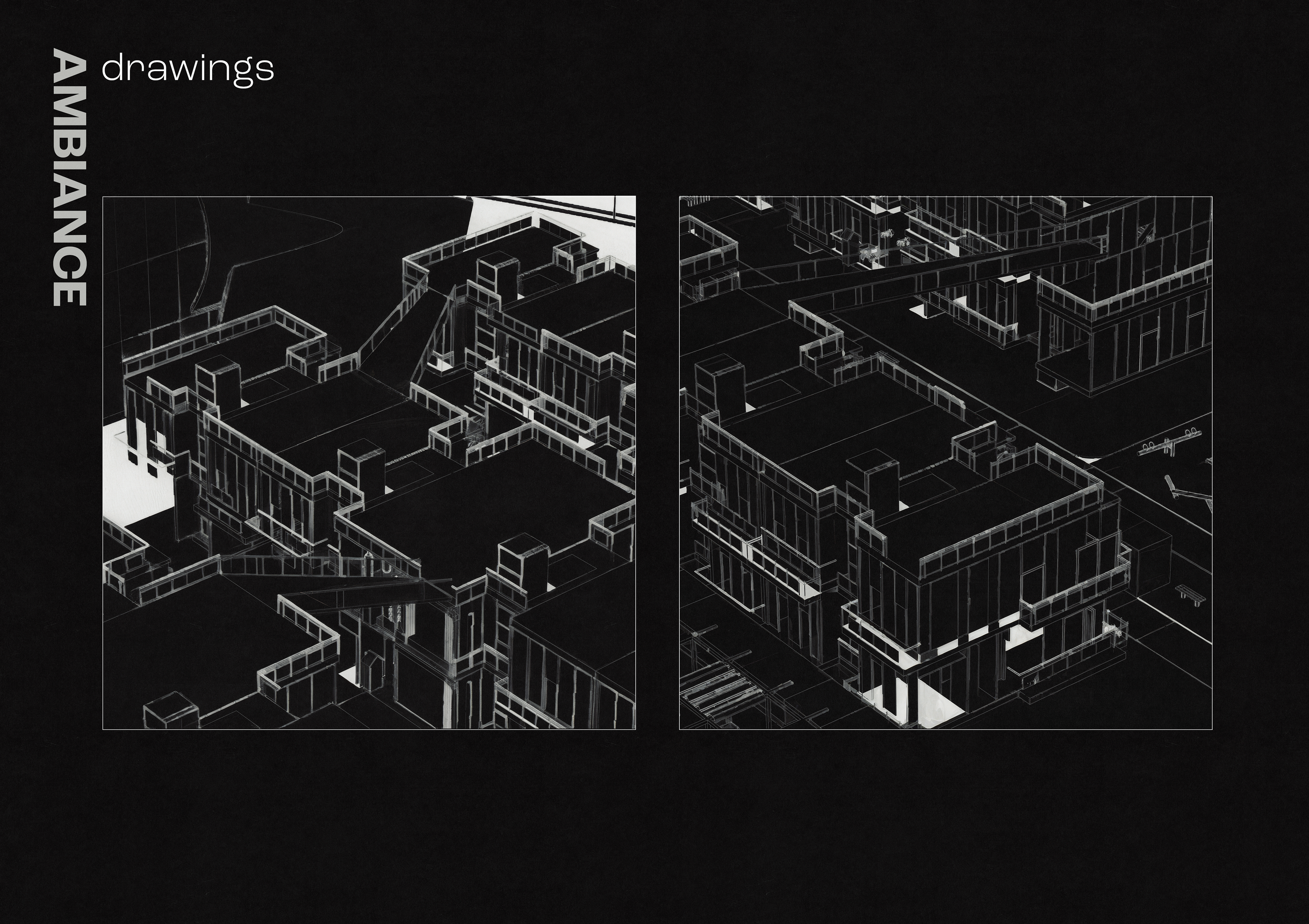
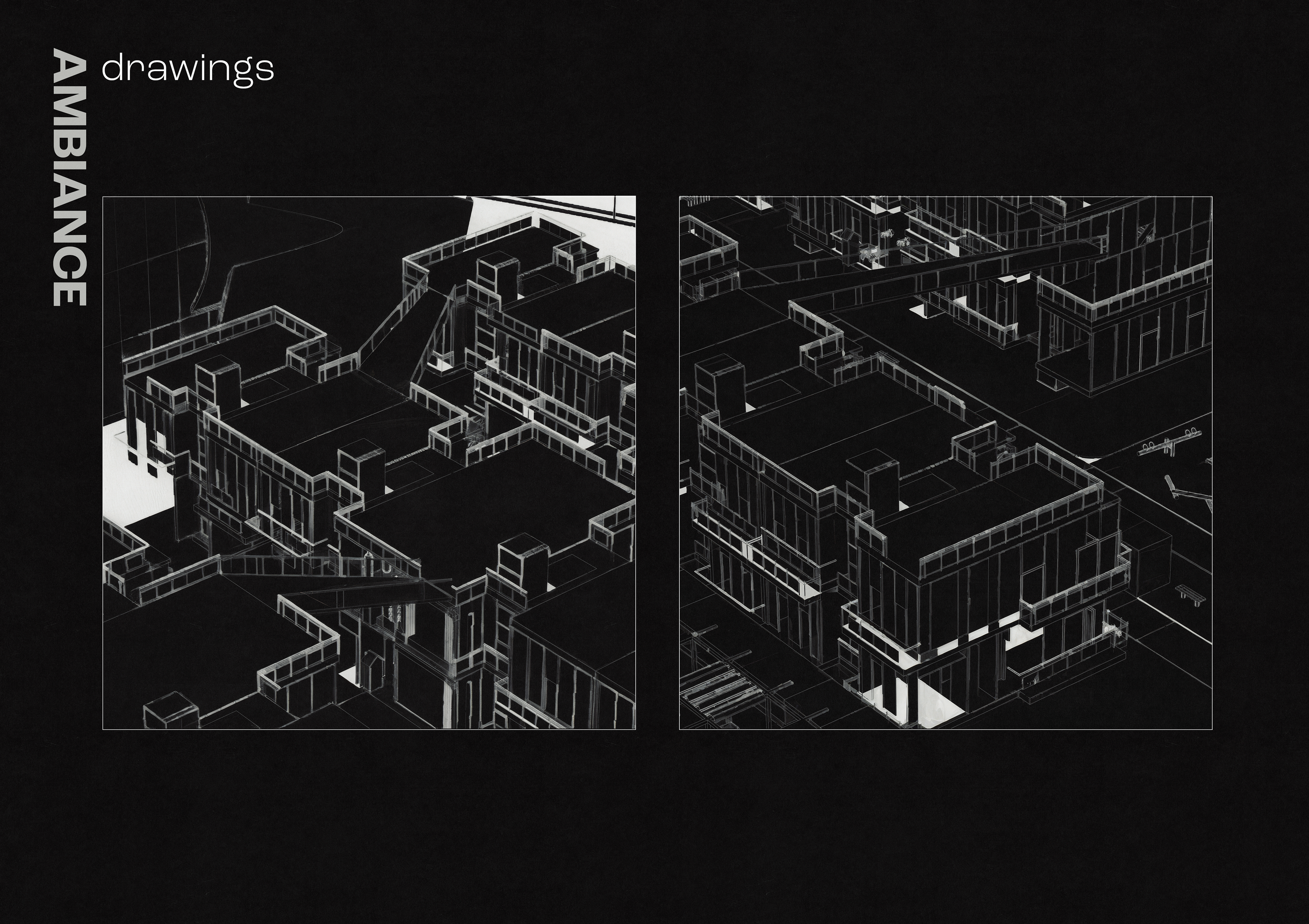
Another important observation from the site analysis was the social role of rooftops in local daily life. Roofs were not treated as dead surfaces, but as active spaces for hanging out, drying clothes, cooking, gathering, and informal occupation. In response, the project transforms the roofscape into a connected communal layer. Skybridges link housing blocks above ground level, creating an elevated network of shared circulation and collective life. These rooftops become extensions of the domestic realm, integrating gardens, agricultural spaces, coworking areas, and gym functions into the wider community infrastructure.
THEATER